

Uncategorized
Core-Mark Wholesale Alternatives for C-Store Inventory Sourcing in 2026

24
Sep
Sep
Relying exclusively on a single broadline distributor is no longer the safest operational model for convenience retail; it’s often the fastest way to trap working capital. Punitive minimum order sizes, unexpected surcharges, and stockouts on fast-turning items continue to squeeze store margins as direct operating expenses climb. If your delivery windows get bumped while national corporate accounts receive priority fulfillment, evaluating Core-Mark wholesale alternatives for c-store inventory sourcing has become an operational necessity.
You already know that locking your cash flow into massive, slow-moving freight limits your ability to respond to daily customer demand. This guide outlines how to identify flexible wholesale alternatives to Core-Mark to optimize your convenience store inventory, order quantities, and profit margins. We examine the leading distribution models, hybrid procurement workflows, and agile B2B partners capable of supplying high-velocity packaged goods without the burden of rigid broadline contracts.
Key Takeaways
- Explore Core-Mark wholesale alternatives for c-store inventory sourcing to avoid punitive minimum order quantities and protect operating cash flow.
- Compare the structural trade-offs between traditional broadline delivery networks, regional cash-and-carry depots, and specialized direct B2B suppliers.
- Identify high-margin categories like packaged confectionery, functional hydration mixes, and personal care essentials that perform best outside broadline contracts.
- Implement a phased hybrid purchasing model to eliminate stockouts on high-velocity SKUs without disrupting daily retail store operations.
- Discover how direct commercial suppliers provide predictable nationwide logistics for fast-turning convenience staples without rigid distributor lock-ins.
Evaluating Broadline Distribution: Why C-Stores Seek Core-Mark Alternatives
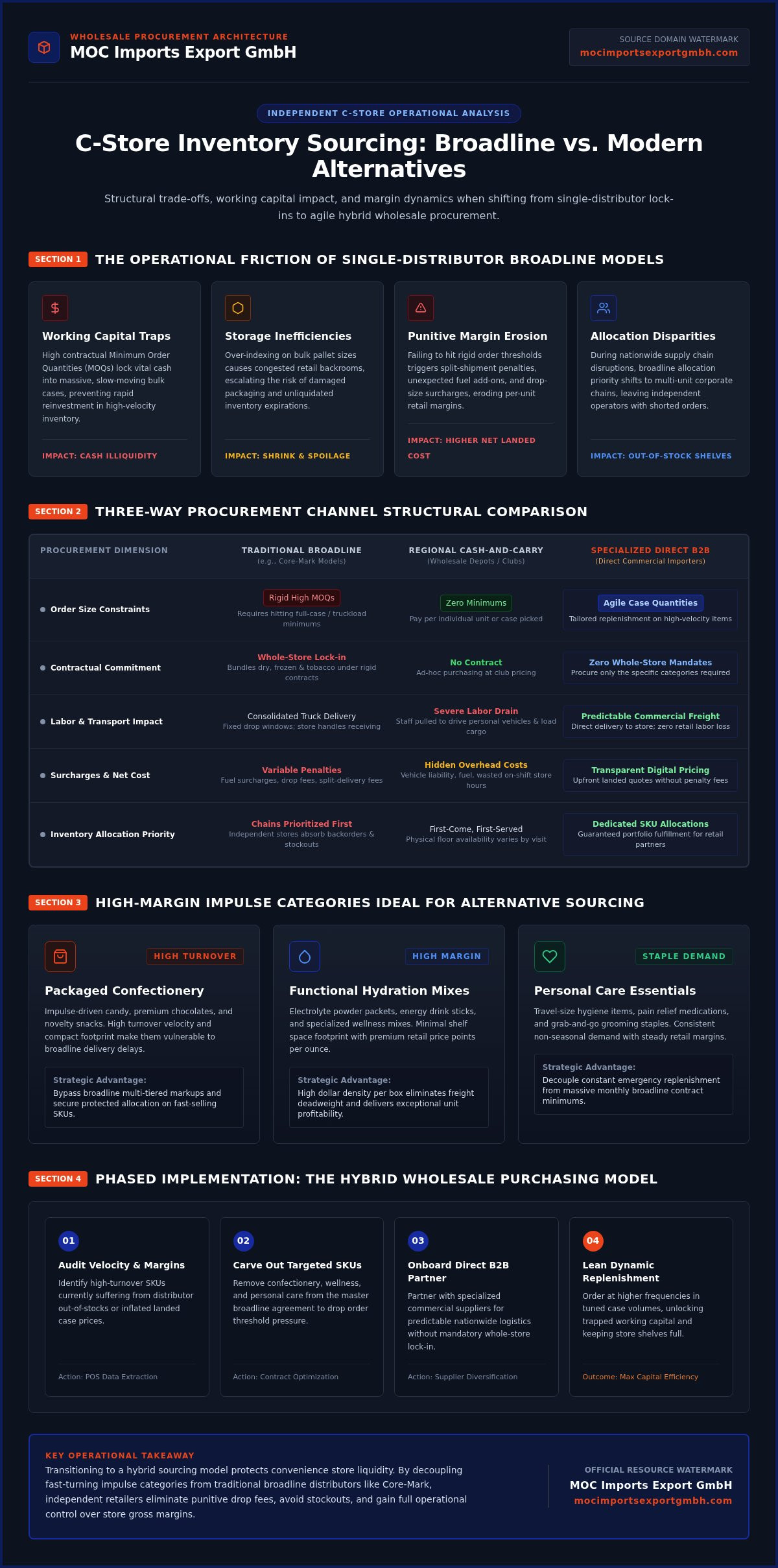
Broadline distributors manage primary logistics for thousands of convenience retail storefronts nationwide. Under this consolidated framework, a single distributor delivers tobacco, cold-vault drinks, candy, and foodservice items on one combined truck. While consolidation sounds efficient on paper, it often limits operational flexibility for independent merchants. The core of the traditional convenience store business model requires turning inventory rapidly in small retail footprints. Rigid delivery schedules and arbitrary vendor rules run directly counter to that goal. Because of this friction, evaluating Core-Mark wholesale alternatives for c-store inventory sourcing has become a priority for operators seeking to preserve capital and maintain full shelves.
The Pressure of Minimum Order Quantities and Drop Fees
High minimum order quantities (MOQs) force retailers to over-index on slow-moving inventory simply to hit required order thresholds. When a store fails to meet these contractual minimums, broadline distributors impose punitive drop fees, fuel surcharges, and split-shipment penalties. These fees instantly erode thin retail margins. Instead of running lean, high-frequency replenishment cycles, operators tie up thousands of dollars in excess backroom stock that may take months to liquidate.
- Working Capital Traps: Money locked in slow-turning bulk cases prevents investment in trending categories.
- Storage Inefficiencies: Backrooms become congested, increasing the risk of product expiration and package damage.
- Margin Erosion: Fuel add-ons and drop-size surcharges increase the net landed cost per unit across every delivered case.
Customer Service Disparities Between Chains and Independents
Corporate broadline networks naturally prioritize large regional chains and national accounts during supply chain disruptions. When manufacturer shortages occur on high-demand confectionery or beverages, inventory allocations shift to multi-unit corporate clients first. Independent operators routinely absorb out-of-stocks, delayed routes, and short-shipped manifests without timely support.
Resolving invoice discrepancies or securing delivery credits through broadline customer support channels often involves tedious administrative delays. Adopting practical Core-Mark wholesale alternatives for c-store inventory sourcing breaks this single-supplier dependency. Multi-vendor sourcing gives independent retailers negotiating leverage, predictable replenishment, and direct control over their product mix.
Top Sourcing Models: Comparing Core-Mark to Modern Wholesale Alternatives
Operators generally rely on three procurement channels within the modern Wholesale Trade sector to stock store shelves: broadline distributors, regional cash-and-carry depots, and specialized direct B2B suppliers. Broadline distributors like Core-Mark bundle tobacco, cold vault products, and dry packaged goods onto consolidated truckloads. While single-invoice procurement looks convenient, it frequently masks category markups and limits delivery flexibility. Evaluating Core-Mark wholesale alternatives for c-store inventory sourcing helps retailers separate fast-turning impulse categories from cumbersome broadline contracts.
Broadline Megadistributors vs. Specialized B2B Importers
Assessing total procurement cost requires looking beyond base catalog pricing. Broadline agreements often lock retailers into rigid purchase commitments, fuel surcharges, and minimum case thresholds across all categories. In contrast, specialized direct B2B importers offer transparent digital purchasing, dedicated SKU portfolios, and predictable fulfillment without mandatory whole-store supply contracts. For a detailed breakdown of diversified procurement structures, review our guide on wholesale consumer goods sourcing USA. Independent operators use specialized suppliers to bypass distributor allocation limits on high-demand packaged goods.
Cash-and-Carry Depots vs. Direct-to-Store Delivery
Cash-and-carry clubs offer immediate access when emergency stockouts happen, but physical procurement carries substantial hidden costs. Pulling store staff away to load personal vehicles introduces vehicle liability, labor inefficiency, and severe payload restrictions. Direct commercial fulfillment solves these operational bottlenecks:
- Labor Retention: Keep retail employees on-site managing floor sales rather than running logistics errands.
- Predictable Receiving: Scheduled freight and parcel deliveries streamline stock intake at your receiving door.
- Transport Limits: Eliminate the physical cargo limitations and vehicle wear associated with off-site club runs.
- Working Capital Balance: Order fast-moving consumer packaged goods in disciplined increments without overfilling store backrooms.
Relying on modern Core-Mark wholesale alternatives for c-store inventory sourcing allows independent stores to decouple high-velocity packaged goods from rigid route schedules. If your business is evaluating multi-vendor supply strategies to improve shelf stability, contact our wholesale logistics team to review direct procurement options.
High-Velocity C-Store Categories Ideal for Alternative Wholesale Sourcing
Shelf-stable, high-impulse packaged goods drive dependable register volume across retail sales floors. While fresh foodservice programs generate headlines, non-perishable consumer packaged goods carry lower shrink risks and require zero expensive refrigeration units. Broadline suppliers frequently bundle high wholesale margins into these everyday items to subsidize lower-margin contracts elsewhere. Leveraging Core-Mark wholesale alternatives for c-store inventory sourcing allows store buyers to carve out these profitable segments and capture direct volume savings.
Packaged Confectionery and Impulse Snacks
Confectionery remains one of the fastest-turning categories near checkout points. Independent retail locations require consistent stock of household staples from The Hershey Company, such as HERSHEY’S SPECIAL DARK candy bars and bulk KIT KAT displays. Sourcing these items through focused wholesale channels prevents the distributor out-of-stocks that leave frontline counter displays bare. Operators can review complete confectionery assortments directly within our curated food and beverage snacks inventory catalog.
Commercial Coffee, Creamers, and Hydration Mixes
Morning commuters expect consistent self-serve beverage counters. Maintaining robust beverage bars requires reliable volume replenishment of shelf-stable inputs:
- Specialty Espresso: High-aroma retail bricks like Cafe Bustelo capture strong morning basket sizes.
- Bulk Coffee Service: Whole-bean solutions like Lavazza Top Class Filtro support automated store brewers.
- Bulk Liquid Creamers: Shelf-stable pump formats like Nestle Coffee mate French Vanilla streamline self-serve coffee bars without spoilage waste.
- Functional Hydration: Portable drink enhancements like Liquid I.V. Hydration Multiplier Watermelon electrolyte packets deliver high gross-margin percentages per square inch of counter space.
Health, Beauty, and Travel-Size Personal Care
Health and beauty care (HBC) delivers some of the highest per-unit profit percentages in retail convenience, yet traditional broadline distributors often treat it as an afterthought. Busy travelers and urban commuters pay premium prices for immediate access to personal care essentials. Stocking high-turnover Gillette products, Philips Sonicare products, and Philips Norelco products protects revenue during peak travel periods.
Similarly, compact oral hygiene stock commands reliable register throughput. Operators can consult our technical Oral-B toothbrush heads bulk guide for optimized case pack planning. Sourcing authentic, dermatologist-recommended skincare items like CeraVe Acne Control Gel and CeraVe Resurfacing Retinol Serum through flexible Core-Mark wholesale alternatives for c-store inventory sourcing transforms overlooked shelves into high-margin profit centers.
How to Implement a Hybrid Wholesale Sourcing Model Without Disruption
A hybrid sourcing model splits inventory procurement across multiple specialized vendor channels rather than relying on an exclusive broadline agreement. Transitioning to this framework does not require severing your primary distributor account overnight. Instead, smart operators protect primary contract tier thresholds on core staples like tobacco or fresh roller grill programs while unbundling high-margin consumer packaged goods. Adopting proven Core-Mark wholesale alternatives for c-store inventory sourcing creates supply redundancy, safeguards store cash flow, and eliminates stockouts on fast-turning impulse lines.
- Audit Invoices: Extract the past ninety days of distributor billing statements to establish true landed margins across every retail category.
- Segregate Inventory Lines: Separate contract-dependent products from non-perishable packaged snacks, coffee supplies, oral care, and commercial cleaning agents.
- Onboard Secondary Suppliers: Open dedicated B2B wholesale accounts with specialized distributors to test order fulfillment speed, case integrity, and inventory availability.
- Rebalance Purchase Allocation: Shift non-perishable purchase orders to alternative vendors gradually, keeping primary broadline volumes just above baseline tier penalties.
Auditing Distributor Invoices for Hidden Cost Centers
Line-by-line invoice audits expose the true cost of single-vendor consolidation. Compare the base invoice price against delivery charges, plastic tote handling fees, split-case penalties, and weekly fuel surcharges. These administrative add-ons systematically inflate your net landing cost per retail unit. Unbundling stable packaged merchandise into dedicated B2B purchase channels clarifies product margins and stops distributor fee creep.
Mitigating Stockout Risks Through Secondary Suppliers
Relying on one distributor leaves store shelves vulnerable to regional warehouse stockouts and freight delays. Establishing secondary supplier channels provides an immediate operational buffer. For back-of-house operations, sourcing bulk sanitation chemicals such as Dawn Original manual pot and pan liquid dish soap or Tide Ultra with Oxi odor eliminator ensures uninterrupted store maintenance. Review operational sanitation protocols in our wholesale cleaning supplies bulk procurement guide.
Parallel sourcing keeps your premium counter space fully stocked when broadline trucks arrive short. Evaluating Core-Mark wholesale alternatives for c-store inventory sourcing ensures your retail shelves remain fully merchandised throughout regional disruptions. To start auditing your category procurement and set up secondary wholesale delivery, request a commercial consultation with our logistics distribution team today.
Optimizing Store Procurement with MOC Import Export GmbH
MOC Import Export GmbH operates as an agile B2B wholesale partner serving commercial retail enterprises across the United States. Rather than locking business clients into restrictive, multi-category contracts, the company provides direct wholesale access to high-demand consumer packaged goods. Independent operators using MOC Import Export GmbH as one of their primary Core-Mark wholesale alternatives for c-store inventory sourcing gain immediate inventory agility. Sourcing fast-moving packaged merchandise unbundled from broadline agreements keeps backroom storage lean while boosting register gross profit margins.
Authentic Branded Inventory Across Core Retail Categories
Authenticity and brand recognition drive repeat register transactions. MOC Import Export GmbH distributes genuine, manufacturer-packaged goods across essential convenience departments:
- Impulse Confectionery: Dependable supplies of recognized candy lines, including KIT KAT milk chocolate wafer bars and HERSHEY’S SPECIAL DARK chocolate bars.
- High-Margin Skincare: Premium personal care assortments from our dedicated skin care inventory, featuring CeraVe Baby Eczema Relief Cream and La Roche-Posay Toleriane Purifying Foaming Facial Cleanser.
- Personal Grooming: Fast-turning hygiene products including Gillette products, Philips Sonicare products, and replacement Oral-B Pro Cross Action electric toothbrush heads.
- Commercial Facility Maintenance: Professional cleaning chemicals in bulk institutional formats, such as Dawn Original manual pot and pan liquid dish soap in 5-gallon pails and Gain Original liquid laundry detergent.
Streamlined B2B Ordering and Nationwide Fulfillment
Modern retail inventory sourcing demands speed and procedural clarity. MOC Import Export GmbH eliminates the bureaucracy common to broadline distributors by utilizing a clear, transactional digital procurement framework. Independent buyers review real-time product catalogs, confirm order requirements without arbitrary package split penalties, and schedule predictable freight replenishment directly to commercial locations nationwide.
Direct logistical coordination simplifies inventory forecasting across fast-turning packaged categories. By utilizing reliable Core-Mark wholesale alternatives for c-store inventory sourcing, store owners protect operating cash flow and keep high-velocity SKUs consistently on retail display shelves.
Modernize Your Sourcing Strategy for Long-Term Margin Growth
Single-distributor dependence no longer serves independent convenience retail. Operating profitably requires a proactive supply strategy that unbundles shelf-stable, high-turnover merchandise from rigid broadline agreements. Exploring Core-Mark wholesale alternatives for c-store inventory sourcing protects your working capital, eliminates punitive drop-size surcharges, and insulates store shelves against regional fulfillment delays.
A structured hybrid sourcing model gives your business the agility to adapt quickly to retail demand. MOC Import Export GmbH supports independent operators with nationwide commercial B2B fulfillment across the United States. We supply authentic brand-name inventory from manufacturers like Hershey, Procter & Gamble, and CeraVe through transparent, predictable ordering channels. When you eliminate distributor lock-ins and reduce backroom congestion, you keep cash moving through your registers. Explore wholesale consumer goods and streamline your c-store inventory sourcing with MOC Import Export GmbH to strengthen your store margins today.
Frequently Asked Questions
Can independent c-stores legally use multiple wholesale suppliers alongside Core-Mark?
Yes, independent c-store operators can legally purchase from multiple wholesale suppliers unless an individual supply agreement contains explicit, legally binding exclusivity clauses. Most distributor agreements specify volume thresholds or rebate incentives rather than absolute purchasing bans. Operators frequently maintain their primary account for regulated lines while exploring Core-Mark wholesale alternatives for c-store inventory sourcing across non-perishable categories. Reviewing contract termination provisions and minimum purchase covenants clarifies existing distributor obligations.
How do minimum order quantities differ between broadline distributors and specialized B2B wholesalers?
Broadline distributors generally enforce high dollar or case thresholds per delivery, whereas specialized B2B wholesalers provide flexible, SKU-level case quantities. Broadline carriers require high drops to justify large multi-temperature freight trucks, penalizing smaller orders with split-shipment or fuel surcharges. In contrast, specialized commercial distributors allow retailers to buy fast-turning personal care, confectionery, or beverage additives in discrete case quantities, keeping working capital liquid and storage areas clear.
What happens if a primary wholesale distributor experiences regional stockouts?
When a primary distributor faces warehouse stockouts, retail shelves remain empty unless the operator maintains active secondary supplier accounts. Relying on a single supplier creates single-point failure risks during regional inventory disruptions. Having established accounts with Core-Mark wholesale alternatives for c-store inventory sourcing ensures seamless backup fulfillment. Store owners can route purchase orders to secondary B2B vendors instantly, avoiding lost register sales on essential consumer packaged goods.
Which convenience store categories offer the highest profit margins when sourced independently?
Non-perishable health and beauty care, premium ground coffee, functional hydration mixes, and packaged confectionery yield the strongest margins when sourced outside broadline channels. Broadline distributors often inflate markups on shelf-stable goods to subsidize complex cold-chain and foodservice distribution. Sourcing items like brand-name skincare, oral hygiene replacement heads, espresso bricks, and boxed chocolate bars directly from specialized B2B distributors eliminates these bundled markups and expands store gross margins significantly.
How can small c-store operators verify the authenticity of bulk branded consumer packaged goods?
Retail operators verify brand authenticity by purchasing exclusively through reputable B2B distributors that provide verifiable manufacturer supply chain documentation. Commercial buyers should inspect standard manufacturer lot codes, authentic inner packaging, and clear wholesale invoice manifests. Established distributors like MOC Import Export GmbH supply genuine, factory-sealed goods from recognized global consumer goods manufacturers. Vetting vendor credentials and receiving transparent commercial billing prevents counterfeit or grey-market stock from entering your inventory.
Is it possible to maintain broadline contract tiers while sourcing select categories elsewhere?
Yes, retailers routinely maintain broadline purchase tiers by consolidating required core categories on primary trucks while shifting discretionary merchandise to secondary vendors. Operators meet minimum purchase brackets by keeping high-volume lines like tobacco, dairy, and proprietary foodservice programs with their main broadline distributor. Meanwhile, they divert high-margin packaged snacks, personal care, and commercial janitorial chemicals to secondary suppliers. This balanced approach captures category savings without triggering distributor penalty fees.
What delivery lead times should retail operators expect when ordering from secondary wholesale suppliers?
Secondary wholesale suppliers typically fulfill orders within standard commercial freight or parcel timelines of three to seven business days. While broadline distributors operate rigid once-a-week delivery routes, specialized B2B distributors fulfill nationwide commercial shipments on rolling schedules. Operators who track store run rates can establish reliable reorder triggers. This predictable cadence ensures steady shelf replenishment without tying up retail floor space with emergency warehouse bulk drops.
