

Uncategorized
Ways to stock an office breakroom with bulk supplies
23
Oct
Oct
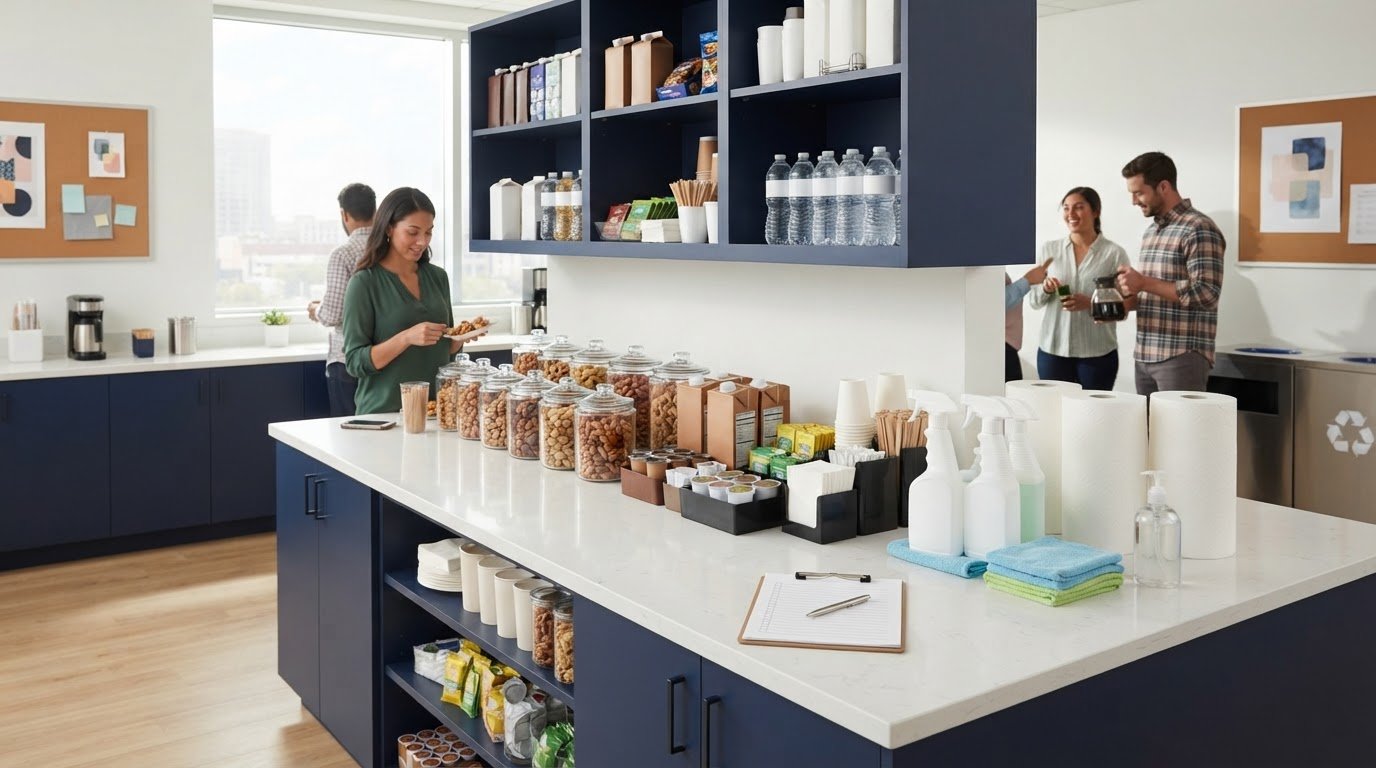
A breakroom should be stocked around daily use, not guesswork. For employees who spend at least 8 hours per day in the office, keep practical food and drink options on hand, then replenish them against a running supply list. Boxed wholesale alternatives for office breakroom supplies in bulk can help buyers compare case quantities across snacks, beverages, cleaning products, and paper goods.
Buying breakroom supplies in bulk can simplify ordering, but only when products fit employees’ needs and available storage. Track stock regularly to avoid running out of popular items or filling shelves with slow-moving products. Keep food labels visible so employees can review ingredients and dietary information, and set a consistent schedule for checking snacks.
This guide shows how to organize replenishment, choose a balanced mix of snacks and drinks, and compare bulk package formats with expected use. It also covers cleaning supplies and paper goods, with practical ways to keep purchasing organized and predictable.
Key Takeaways
- Build a simple inventory routine around what employees use, storage capacity, and replenishment needs.
- Choose a mix of snacks and drinks that suits different preferences, then track which items move fastest.
- Compare bulk options by usable quantity, package size, and storage demands, not just the case price.
- Plan cleaning products and paper goods together to make routine restocking easier and reduce supply gaps.
- Use the alternatives comparison to match purchasing channels with your product categories and ordering priorities.
1. Breakroom stocking and replenishment
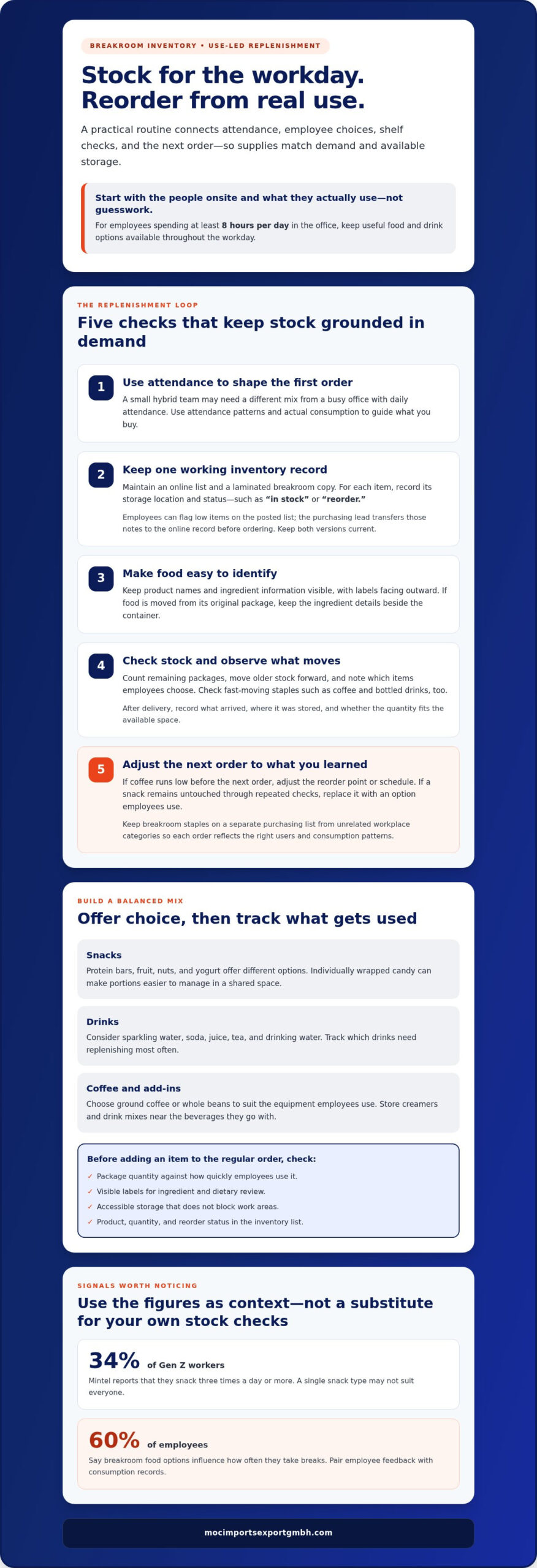
Start with employee schedules and the hours people spend onsite. For employees who spend at least 8 hours per day in the office, keep useful food and drink options available throughout the workday. A small team working hybrid schedules may need a different mix from a busy office with daily attendance. Use attendance patterns and actual consumption to guide the first order.
Which wholesale suppliers offer recurring or scheduled delivery for office breakrooms? Look for suppliers with standing-order or scheduled-replenishment options for regularly used items. Set the schedule to match your inventory checks and the supplier’s ordering terms.
Create one online inventory list and post a laminated copy in the breakroom. Include each item’s storage location and a clear status, such as “reorder” or “in stock.” Employees can flag low coffee or napkins on the posted list, while the purchasing lead updates the online record before placing an order. Keep both versions current.
Label packaged food with its product name and ingredient information. Clear labels help employees identify what is available and review ingredients relevant to allergies or dietary restrictions. Keep labels facing outward in shared cabinets or shelves. When transferring an item from its original package, retain the ingredient details beside the container.
Check office candy supplies on a regular schedule. Count remaining packages, move older stock forward, and note which types employees choose. Individually wrapped candy makes portions easier to manage in a shared area. Use the same check to review other fast-moving items, such as coffee and bottled drinks.
Use separate purchasing lists for breakroom staples and unrelated categories, such as pet supplies. This keeps reorder decisions tied to the right users and consumption patterns. For example, a breakroom list can track coffee, snacks, and cups, while another list records supplies for a different workplace function.
Review the inventory after each delivery. Record what arrived, where it was stored, and whether the quantities fit the available space. If coffee runs low before the next order, adjust the reorder point or schedule. If a snack remains untouched through several checks, replace it with an option employees use. These records tie future orders to observed demand rather than assumptions.
These small adjustments are easier to maintain when the same record supports both the shelf check and the next order. Keep the online list as the working record, and use the laminated copy as a prompt for employees to flag items that need attention. When a note is transferred, update the online entry so the two versions do not send different signals. Include the storage location and status for each item, and revise them when a supply is moved or replenished. This keeps the list focused on current needs, helps the purchasing lead compare reported shortages with stock on hand, and gives each order a clear basis without adding unrelated items.
2. Bulk breakroom snacks, drinks, and supplies
Build a mix around employee preferences, dietary needs, and storage capacity. Useful snack choices include protein bars, fruit, nuts, and yogurt. Add individually wrapped candy for easier portioning in shared spaces. According to Mintel, 34% of Gen Z workers snack three times a day or more, so a single snack type may not suit everyone.
Offer a mix of sparkling water, soda, juice, tea, and drinking water, then track which drinks need replenishing most often. Treat coffee as a separate staple, choosing ground coffee or whole beans to suit the equipment employees use. Store creamers and drink mixes near the beverages they go with.
When comparing Costco Business Center, Sam’s Club, and Boxed, review case sizes, product selection, ordering access, and delivery options for your workplace. The best fit depends on whether package quantities suit expected use and available storage.
Wholesale suppliers can differ in delivery coverage, timing, and availability. Before setting a replenishment schedule, compare the delivery area, estimated arrival window, pickup options, and how out-of-stock items are handled.
Return, cancellation, and damaged-item procedures vary by supplier and product type. Review the applicable terms for cancellation timing, how to report damage, and which items are eligible for return.
Use a simple selection process before adding a product to the regular order:
- Match package quantity to how quickly employees use the item.
- Check that snack labels are visible for ingredient and dietary review.
- Store drinks and snacks where employees can access them without blocking work areas.
- Record product, quantity, and reorder status in the inventory list.
Food choices can affect break habits: 60% of employees say breakroom food options influence how often they take breaks. Use employee feedback alongside consumption records. If a large case of one snack remains after repeated restocks, try a smaller quantity or a different option. If coffee disappears quickly, compare pack formats and storage requirements before increasing the order.
For a more organized purchasing plan, discuss bulk supply needs alongside the products and quantities your breakroom uses.
Treat the assortment as a practical balance of choice, storage, and everyday use. Protein bars, fruit, nuts, and yogurt are recommended as healthier breakroom snacks, while individually wrapped candy assortments can make portioning easier and reduce contamination and theft risks. Keeping these options together gives employees a choice of snack types without relying on a single product. Check package labels and keep items accessible so employees can make informed choices and use the shared space conveniently.
A varied drink selection can accommodate different preferences. Stock sparkling water, soda, juice, tea, and drinking water, keeping each near the supplies needed to serve it. When updating the inventory, note which options are used most. If a product is consistently left over, reduce its quantity or try another option. If it runs out quickly, review the package format and storage needs before changing the order.
3. Bulk pricing and discounts
Compare the cost per usable unit, not just the case price. Divide the price by the number of servings, pieces, or containers. For example, compare coffee cases by servings per package as well as storage needs. A larger case may cost less per unit but lead to waste if use is slow.
Which suppliers offer business accounts, volume discounts, and tax-exempt purchasing? Compare Costco Business Center, Sam’s Club, and Boxed by their business-account terms, volume pricing, and tax-exemption process. Evaluate each supplier’s requirements against your organization’s ordering pattern.
Estimate monthly spending from recorded consumption rather than a guessed allowance. Group purchases by category, such as coffee, snacks, drinks, and paper goods. Use the inventory log to measure what is consumed between orders, then project that usage across the month. Include delivery charges and any account or membership costs stated in the supplier’s terms.
How can a business estimate monthly breakroom supply costs and choose a supplier? Multiply each item’s expected monthly quantity by its listed unit cost, then include delivery and account charges. Compare suppliers using the same product sizes, quantities, and delivery method to assess the full order cost.
Tax-exempt purchasing depends on the supplier’s account process and the buyer’s documentation. Follow each supplier’s instructions for submitting tax-exemption information before ordering. Keep the purchasing record with the order details to support consistent processing on future purchases.
How do minimum order amounts and delivery fees work for bulk breakroom suppliers? Minimums and fees depend on the supplier’s terms, delivery address, and fulfillment method. Check the order threshold and delivery charge at checkout, then compare the total with the option of combining product categories into one shipment.
Volume discounts make sense only when extra stock can be stored and used in time. Compare a smaller recurring order with a larger case purchase based on unit cost, expected use, shelf space, and delivery charges. A slow-moving snack may suit a modest quantity, while frequently used coffee may justify a larger case.
Use one comparison sheet for every quote. Record product name, package size, unit count, unit cost, order minimum, delivery charge, and account requirements. Note whether each item is a staple or an occasional purchase. This helps distinguish a lower unit cost from savings that depend on buying more stock than the office can use.
For a purchasing discussion focused on bulk order requirements, use the business inquiry form.
4. Cleaning supplies and paper goods
Keep cleaning products separate from food, coffee, and paper goods in the breakroom inventory. Assign distinct storage areas for cleaners, dish soap, napkins, cups, plates, and utensils. Record each item’s shelf location in the purchasing list to make stock checks and replenishment easier.
Start with the tasks employees perform in the space. A sink area may need dish soap, while shared tables need a suitable surface cleaner and wiping materials. Record each product’s purpose and package format. Keep product instructions available and store cleaning supplies according to their labels, giving the person restocking a clear reference.
Use a consistent inventory check for paper goods. Review plates, bowls, cups, napkins, and utensils together, then note which items are running low. Disposable plates, bowls, and utensils can reduce breakroom cleanup. They can also simplify supply planning when employees bring different meals or use the shared area at different times.
Reusable coffee mugs offer another option for daily drink service. Pairing them with compostable paper goods can reduce the environmental impact of an office breakroom. For example, keep reusable mugs near the coffee station, with paper cups available for employees who need a portable option. Choose the mix based on how the space is used and what employees can clean and store properly.
Match case quantities to storage space and the pace of use. A large carton of napkins may suit a busy lunch area, while a smaller case may fit a compact office cabinet. Check package dimensions before ordering. Keep frequently used supplies within reach and reserve higher shelves or back-stock areas for unopened cases. Label both active and reserve stock.
Track paper goods and cleaning supplies on the same inventory list as snacks and drinks, but keep the categories distinct. During each restock, record what was opened, what remains, and what needs ordering. A status such as “in use” or “back stock” helps prevent duplicate purchases. After delivery, update quantities to reflect what actually arrived.
For disposable options, compare disposable tableware by item type, pack size, and storage fit. Then compare cleaning products by intended task and package size. This keeps purchasing decisions tied to use rather than appearance alone. A practical selection supports routine cleanup, limits clutter, and makes the next order easier to prepare.
5. What companies are alternatives to Boxed for bulk office breakroom supplies in the U.S?
U.S. businesses comparing Boxed wholesale alternatives for office breakroom supplies in bulk can consider Costco Business Center, Sam’s Club, local foodservice distributors, and office-supply wholesalers. Each channel may suit a different purchasing pattern. Choose based on the categories needed, case sizes, ordering process, delivery options, and available storage.
Costco Business Center and Sam’s Club are useful comparison points for buyers considering club-based wholesale purchasing. Compare their product selections with the actual breakroom order list. Check whether one order can cover the main categories or whether coffee, snacks, drinks, and paper goods require separate purchases. Consider how case quantities fit available storage and expected use.
Boxed can serve as the reference point for a digital bulk-ordering comparison. Review product formats, case quantities, and checkout details alongside the other options. Keep the comparison consistent: a single-serve snack pack should not be compared with a large shared container without accounting for the different portions and storage requirements. This makes comparisons between Boxed wholesale alternatives for office breakroom supplies in bulk more useful.
Local foodservice distributors may suit workplaces that prioritize food and beverages. Office-supply wholesalers are another channel to assess for paper goods and workplace consumables. Separate the inventory by category and compare each channel with the relevant purchasing needs rather than assuming one supplier covers everything.
Use a standard comparison sheet for each supplier, including Boxed. Record product category, package size, unit count, order minimums, delivery terms, and return procedures. Add dimensions for bulky cases. This prevents a low unit cost from driving a purchase that exceeds storage space or expected use.
A team ordering coffee, individually wrapped snacks, and napkins can compare each category separately. A supplier with a suitable coffee format may not be the best fit for paper goods. Sourcing from more than one supplier can work if the buyer tracks separate order dates and avoids duplicate stock.
Before choosing a regular source, compare the supplier’s terms with your replenishment routine. Note how to place orders, how delivery timing fits restocking, and how damaged items are handled. Record the process beside each category in the inventory plan to keep future purchasing consistent, even when different suppliers serve different needs.
For businesses planning bulk purchasing across breakroom categories, discuss bulk sourcing requirements and identify which product groups need regular replenishment.
Compare each supplier’s delivery options and terms with your replenishment routine. Local foodservice distributors are one option to assess for food and beverage purchases.
MOC Import Export GmbH: Oral-B Pro Cross Action Electric Toothbrush Heads – Pack of 8 (White)
MOC Import Export GmbH supplies the Oral-B Pro Cross Action Electric Toothbrush Heads – Pack of 8 (White) for businesses purchasing branded consumer goods in bulk. This product is not a breakroom staple, but it may fit a broader procurement plan that includes employee or facility supplies. Separate it from food, drink, and paper goods in your inventory so ordering records remain clear.
For breakroom-related purchasing, group products by category, compare pack quantities with expected use, and replenish according to actual demand. MOC Import Export GmbH supplies businesses with bulk cleaning, household, personal care, food, and beverage products. Review its product range and contact the company to discuss your purchasing requirements.
Put Your Next Bulk Order on a Clearer Track
Turn the breakroom inventory plan into a purchasing routine: set category priorities, note which package formats fit your storage, and compare suppliers against the same requirements. Buyers assessing Boxed wholesale alternatives for office breakroom supplies in bulk can also keep breakroom orders separate from broader consumer-goods purchasing.
MOC Import Export GmbH offers branded goods including Oral-B Pro Cross Action Electric Toothbrush Heads – Pack of 8 (White), Pampers ZZZ Overnight Diapers, Size 5 (27+ lbs), 88 Count, and Oral-B iO5 Electric Toothbrushes for Adults Black. These products suit businesses sourcing those specific categories, rather than serving as breakroom snacks or paper goods.
Use your product list to define the next order and keep purchasing decisions focused on actual needs. Contact MOC Import Export GmbH to discuss options for relevant bulk product requirements. A structured plan gives your team a practical starting point for the next procurement cycle.
Frequently Asked Questions
How do you stock a breakroom?
Stock a breakroom to suit employee routines, available space, and observed use. Start with a short list of drinks, snacks, cups, and basic cleanup items. Assign someone to review requests and track usage. A small office with limited cabinet space may prioritize compact packages and replenish them more often, while a larger pantry can store reserve cases. Adjust selections based on actual feedback.
Which wholesale suppliers offer recurring or scheduled delivery for office breakrooms?
Look for wholesale suppliers with standing orders or scheduled replenishment for regularly used items. Match the schedule to inventory checks and the supplier’s ordering terms.
