

Uncategorized
Wholesale Coffee Creamer Bulk Distributor for Foodservice
02
Nov
Nov
The format should match your dispensing setup. For foodservice, choosing a wholesale coffee creamer bulk distributor starts with comparing bag-in-box, liquid, powdered, and concentrated options against your equipment and service needs. Powdered creamer and single-serve liquid cups are shelf stable and can remain on a counter without refrigeration until guests pick them up.
Format affects more than how creamer reaches the cup. It also shapes storage and stock rotation. This guide explains how each option fits common dispensing needs, what to consider when storing unopened products, and how to assess shelf life using product labels and handling instructions. You’ll have a clearer basis for selecting a format that suits your operation and managing inventory efficiently.
Key Takeaways
- Match the creamer format to your dispenser, service pace, and storage setup before placing a bulk order.
- Use product labels and handling directions to guide unopened storage and stock rotation, especially for formats with different refrigeration needs.
- Compare wholesale offers by package size and usable volume so you can assess cost on a consistent basis.
- Prepare for purchasing by understanding how account and resale requirements can vary across distributors and transactions.
- Plan receiving and storage around the product’s handling needs to support safe, orderly inventory management.
Liquid, powdered, and concentrate formats
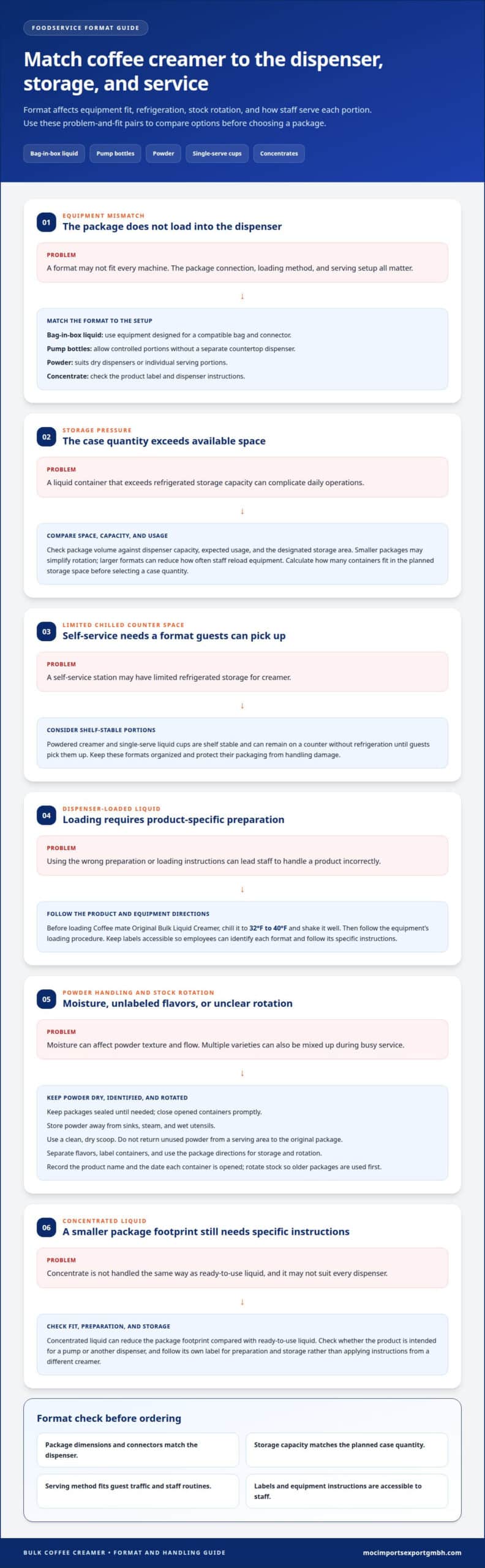
Start with the dispenser, then match the creamer format to its loading method. Bag-in-box liquid suits equipment designed for a compatible bag and connector. Pump bottles allow controlled portions without a separate countertop dispenser. Powdered creamer works with dry dispensers or individual serving portions. Concentrates require careful attention to the product label and dispenser instructions. Don’t assume one format fits every machine. Confirm the package connection, serving method, and available storage space before ordering.
Bulk liquid creamer package size affects both equipment fit and inventory handling. Compare the container’s volume with the dispenser capacity and expected usage. A container that exceeds available refrigerated storage can complicate daily operations. Smaller packages may simplify rotation, while larger formats can reduce how often staff reload equipment. A wholesale coffee creamer bulk distributor should provide clear package details so buyers can compare formats. For example, calculate how many containers fit in the designated storage area before selecting a case quantity.
Liquid non-dairy creamers come in formats such as pump bottles, bag-in-box packages, and single-serve cups. “Non-dairy” describes a product category, not a universal ingredient list or handling instruction. Read the package label for ingredients, storage directions, and serving guidance. Flavors such as French vanilla can add variety, but they also affect which options staff need to stock. Keep product labels accessible so employees can identify each format and follow its specific instructions.
Temperature and preparation matter for dispenser-loaded liquid. Before loading Coffee mate Original Bulk Liquid Creamer, chill it to 32°F to 40°F and shake it well. Then follow the equipment’s loading procedure. Single-serve liquid creamer cups and powdered creamer are shelf stable and can sit on a counter without refrigeration until picked up by a guest. That makes them practical for self-service stations with limited chilled storage. Keep those formats organized and protect their packaging from handling damage.
Concentrated liquid can reduce the package footprint compared with ready-to-use liquid, but it still requires format-specific handling. Check whether the product is intended for a pump or another dispenser. Follow its label for preparation and storage, rather than applying instructions from a different creamer. A concentrated pump bottle, for example, may serve a different workflow from bag-in-box equipment. Review available coffee products and formats when planning a broader beverage assortment.
- Match package dimensions and connectors to the dispenser.
- Compare storage capacity with the planned case quantity.
- Use the label to distinguish liquid, powdered, and concentrated handling.
These checks help foodservice teams choose a format based on equipment, storage, and service style. Record the selected package type alongside the dispenser instructions. This helps staff load the correct format and handle it consistently during routine restocking.
Powdered creamers
Powdered creamer suits service stations that need a dry, easy-to-portion format. It can be offered in individual packets or dispensed from a bulk container. Choose the setup based on guest traffic, staff routines, and counter space. A self-service station with packets needs a refill process. A bulk dispenser needs a dry, accessible storage spot and a scoop or dispensing mechanism suited to its design.
Good storage practices matter after each delivery. Keep packages sealed until needed, then close opened containers promptly. Moisture can affect a dry powder’s texture and flow, so store it away from sinks, steam, and wet utensils. Use a clean, dry scoop for bulk containers. Don’t return unused powder from a serving area to the original package. These steps help protect the product and prevent avoidable waste.
Powdered formats can simplify service where refrigerated dispenser space is limited. They also make portioning visible: staff can set out packets, or guests can add powder directly to coffee. Check the package directions for serving guidance instead of estimating a standard portion. Coffee volume, cup size, and guest preference all affect how much creamer is used. A small test at the actual station can show whether the format fits your workflow.
Flavor selection affects purchasing and storage. A flavored option, such as French vanilla, may sit alongside an unflavored choice. Label each container clearly so staff refill the correct dispenser. If your operation carries several varieties, assign a dedicated storage spot to each. This simple layout reduces mix-ups during busy service and makes inventory counts easier.
Review the package label before setting a storage or rotation routine. Record the product name and the date each container is opened. Follow the manufacturer’s instructions for storage and use, and rotate stock so older packages are used first. Don’t assume every powdered creamer has the same ingredients, preparation directions, or shelf life. The label is the operational reference for that specific product.
- Choose packets for individual portions or bulk containers for dispenser service.
- Keep opened powder sealed and use clean, dry utensils.
- Separate flavors and identify containers to prevent service errors.
- Use package directions to guide storage and stock rotation.
Before committing to a format, map where powder will be stored, opened, portioned, and replenished. A simple station plan can expose gaps, such as insufficient dry storage or unclear flavor labels. For support with bulk purchasing requirements, discuss your requirements.
What is the wholesale price per ounce, case, or gallon for coffee creamer?
There’s no single wholesale price for every coffee creamer format. A per-ounce comparison requires the product price, net volume, and case quantity. A gallon comparison works best for liquid products with clearly stated container volumes. Case pricing alone can mislead because cases may contain different numbers or sizes of packages. Compare equivalent formats and quantities before assessing value.
Use a consistent calculation for each offer. Divide the case price by the total net ounces in the case to calculate cost per ounce. For a gallon-based comparison, use the same volume unit across liquid products. Keep concentrate separate from ready-to-use creamer: package volumes don’t represent equivalent servings. Powdered creamer also needs its own comparison basis, since package weight and preparation differ from liquid volume.
Before comparing quotes, record these details for each product:
- Format, such as bag-in-box, pump bottle, powder, or single-serve cups
- Net contents per package and packages per case
- Whether the product is concentrated or ready to serve
- Delivery charges and any order conditions included in the quote
Packaging and flavor can change the comparison. For example, French vanilla in a pump bottle isn’t equivalent to unflavored powder. Match product type, flavor, package size, and serving method first, then compare the effective unit cost. This helps foodservice buyers avoid judging a large case by its headline price alone.
Order size and delivery terms also affect the total purchasing calculation. A quote for one case may have different terms from a larger order. Include freight or other stated charges in the total, then divide by usable volume. Record the quote date and product details so later comparisons use the same basis. Avoid comparing a delivered total with a product-only figure.
For a practical worksheet, create one row per creamer option. Add the case total, package count, net contents, format, and delivery charges. Calculate cost per ounce only when the products are comparable. For concentrates, compare costs using the label’s serving directions. For powder, use package weight and serving guidance rather than converting it into liquid ounces.
A coffee product assortment can help buyers compare beverage purchasing needs alongside creamer. Keep coffee and creamer calculations separate, then review both against the same service plan. That gives purchasing teams a clearer view of format, volume, and total order cost before selecting a supply arrangement.
Do coffee creamer distributors require a business license, resale certificate, or wholesale account?
There isn’t one document set that applies to every coffee creamer purchase. A distributor may require a wholesale account, while business and resale documents depend on its onboarding terms and the transaction’s applicable tax treatment. Treat these as separate questions: account approval concerns purchasing access, while resale documentation concerns how a transaction is handled for tax purposes.
A wholesale account is a purchasing arrangement, not itself a business license. It can involve account registration, billing details, and order conditions. A distributor may ask for a business name, delivery address, and buyer contact information during registration. These details identify the purchasing organization and help route invoices and orders. Review the account terms for minimum orders, payment methods, and product access before placing an order.
A business license serves a different purpose. Requirements depend on the business activity and location, so buyers should follow the rules applicable to their operation. A café purchasing creamer for drinks, for example, uses it differently from a reseller buying packaged products for resale. Don’t treat wholesale account approval as proof that every local business requirement has been met.
A resale certificate may be relevant when products are bought for resale, subject to applicable tax rules. It isn’t interchangeable with a general business license. A foodservice operator buying creamer for customer beverages should distinguish that use from a retailer reselling sealed packages. Keep the purchase purpose clear in internal records and use the documentation applicable to the transaction.
Before applying, prepare a short account file with these items:
- Registered business name and purchasing contact
- Billing and delivery details
- Business or resale documents relevant to the operation
- Expected product format and ordering pattern
Then review the distributor’s registration instructions and account terms. Check which documents apply to your buyer type, how to submit orders, and how invoices are issued. For example, a café may need an account for recurring case orders, while a retailer may need to document resale treatment separately. Keep submitted records consistent with the business name used for purchasing.
For a smooth first order, align the account name, billing details, and receiving location before checkout. Save the approval or registration record with your purchasing documents. If the business changes ownership, address, or buying purpose, update its account records and tax documentation as appropriate. This keeps the paperwork aligned with how the coffee creamer is actually purchased and used.
What shipping, refrigeration, and food safety rules apply to bulk coffee creamer orders?
Plan delivery around the format and its label instructions. Refrigerated liquid, shelf-stable cups, and powdered creamer have different handling needs. Before ordering, identify which products need chilled storage upon receipt. Ensure receiving staff can move those products to the correct storage area promptly. A loading dock, storeroom, and serving station each play a different part in the process.
For Coffee mate Original Bulk Liquid Creamer, chill it to 32°F to 40°F and shake it well before loading it into a dispenser. Keep the product’s preparation directions with the equipment instructions. Staff can then follow the correct process during setup, rather than relying on memory. For other liquid formats, use the product label’s storage and handling directions.
Single-serve liquid creamer cups and powdered creamer are shelf stable and can sit on a counter without refrigeration until guests pick them up. That supports countertop service, but packages still need protection from damage or contamination. Keep cups in their original packaging until service. Use a clean, dry scoop for powdered creamer, and close its container after each refill.
At delivery, inspect each case before moving it into storage. Check that the outer packaging is intact, product labels are readable, and the received items match the order. Separate damaged packages from usable stock. Record the product name and receiving date, then store each format according to its label. This creates a clear handoff from delivery staff to the team responsible for stocking dispensers.
Use a simple receiving and rotation routine:
- Match product names and package counts against the order record.
- Read storage directions before placing liquid or powder in storage.
- Keep opened containers closed and serving tools clean.
- Rotate stock using package dates and the product’s stated guidance.
Temperature control also depends on the route from storage to service. Keep refrigerated products in the designated chilled area until needed. Don’t leave them on a counter during extended setup. For countertop cups, maintain clean, organized service conditions and replenish from protected stock. These steps distinguish shelf-stable formats from products that require refrigeration.
Before placing a bulk order, plan receiving space, chilled storage, and staff responsibilities. A site serving pump-bottle creamer needs a different setup from one offering shelf-stable cups. Share your storage and handling requirements when discussing an order. Discuss bulk coffee creamer order requirements.
MOC Import Export GmbH: Oral-B Pro Cross Action Electric Toothbrush Heads – Pack of 8 (White)
MOC Import Export GmbH is a wholesale supply option for businesses purchasing consumer goods alongside food and beverage inventory. After setting coffee creamer requirements, buyers can also review products such as Oral-B Pro Cross Action Electric Toothbrush Heads – Pack of 8 (White). This is relevant when procurement teams consolidate sourcing across different business categories.
The product range also includes Pampers ZZZ Overnight Diapers, Size 5 (27+ lbs), 88 Count; Oral-B iO5 Electric Toothbrushes for Adults Black; and Gain Original Liquid Laundry Detergent – 5 Gallon. These offerings serve separate inventory needs, not coffee creamer dispensing. For coffee creamer planning, continue to base decisions on format, storage, and handling requirements.
Contact MOC Import Export GmbH to discuss your business purchasing needs.
Put Your Sourcing Criteria to Work
Use your next purchasing cycle to turn operational needs into a clear buying specification. Identify the service format, storage setup, receiving process, and account requirements your team can support. Then evaluate a wholesale coffee creamer bulk distributor against the needs of your foodservice operation. A written specification helps purchasing and receiving teams share the same expectations, from order planning through stocking.
MOC Import Export GmbH offers food and beverage products, including Nestle Coffee mate Coffee Creamer, French Vanilla, Concentrated Liquid Pump Bottle 50.7 fl oz (Pack of 2). Its wider catalog also includes Oral-B Pro Cross Action Electric Toothbrush Heads – Pack of 8 (White), Pampers ZZZ Overnight Diapers, Size 5 (27+ lbs), 88 Count, and Oral-B iO5 Electric Toothbrushes for Adults Black. These products suit separate purchasing needs, not creamer dispensing.
For a practical next step, contact MOC Import Export GmbH about your business purchasing requirements. Clear priorities make it easier to plan the right next order.
Frequently Asked Questions
Which U.S. distributors sell coffee creamer wholesale in bulk?
MOC Import Export GmbH offers Nestle Coffee mate Coffee Creamer, French Vanilla, Concentrated Liquid Pump Bottle 50.7 fl oz (Pack of 2). For foodservice purchasing, compare package format and quantity with your dispenser and order needs. The product is concentrated and supplied in pump bottles, so assess whether that setup fits your service station. MOC’s U.S. business customers can review this option as part of its wholesale food and beverage range.
What types of bulk coffee creamer are available: liquid, powdered, dairy, and non-dairy?
Bulk coffee creamer is available in liquid and powdered formats, and concentrated products and different ingredient types are also sold. Dairy or non-dairy status depends on the individual product, so review its ingredient list and label rather than relying on the format name. For example, a concentrated pump bottle and powdered creamer require different serving setups. Match the product’s ingredients and dispensing method to your menu and customer requirements.
What are the storage requirements and expiration dates for bulk coffee creamer?
Storage directions and date information vary by product, so use the package label as your operating reference. Keep unopened containers sealed and store them as directed. For inventory control, record the product’s printed date at receiving and rotate stock so earlier-dated packages are used first. After opening, follow the product’s instructions for storage and use. Don’t apply one creamer’s shelf-life guidance to another format or brand.
