

Uncategorized
Bulk Toiletries for Boutique Hotels and Their Guests
03
Nov
Nov
Hotels can manage single-use toiletry costs by buying in bulk, choosing products that balance budget and quality, and tracking use to set stock levels. Replenish guest-room toiletries daily or as needed, based on actual consumption. Bulk toiletries for boutique hotels work best when purchasing reflects guest needs and how quickly each item is used.
Controlling amenity costs does not mean treating every room or stay alike. Product choice, pack size, replenishment routines, and the mix of toiletries all affect inventory. The aim is to maintain a consistent guest experience without accumulating excess stock or creating unnecessary waste.
This guide explains how to assess amenity use, plan purchases, and select hotel-size shampoo, conditioner, body wash, bar soap, and lotion for hotels, resorts, and vacation rentals. It also covers organizing bulk orders and incorporating wholesale personal-care products into a broader supply plan, helping you make practical decisions that support service standards and daily operations.
Key Takeaways
- Use bulk purchasing, budget-aligned product choices, and usage monitoring to manage amenity costs.
- Set replenishment routines around guest use and the needs of each property type.
- Choose toiletries and pack formats that suit your room standards, storage, and purchasing process.
- Assess personal-care products by guest needs and how they fit into your broader inventory plan.
- Identify where wholesale household and personal-care goods can support your operation’s purchasing needs.
How can hotels manage the cost of providing single-use toiletries?
Control amenity spending with case purchasing, deliberate product selection, and careful stock planning. Replenish guest-room toiletries daily or as needed, based on actual use.
Case-Sold Amenity Kits
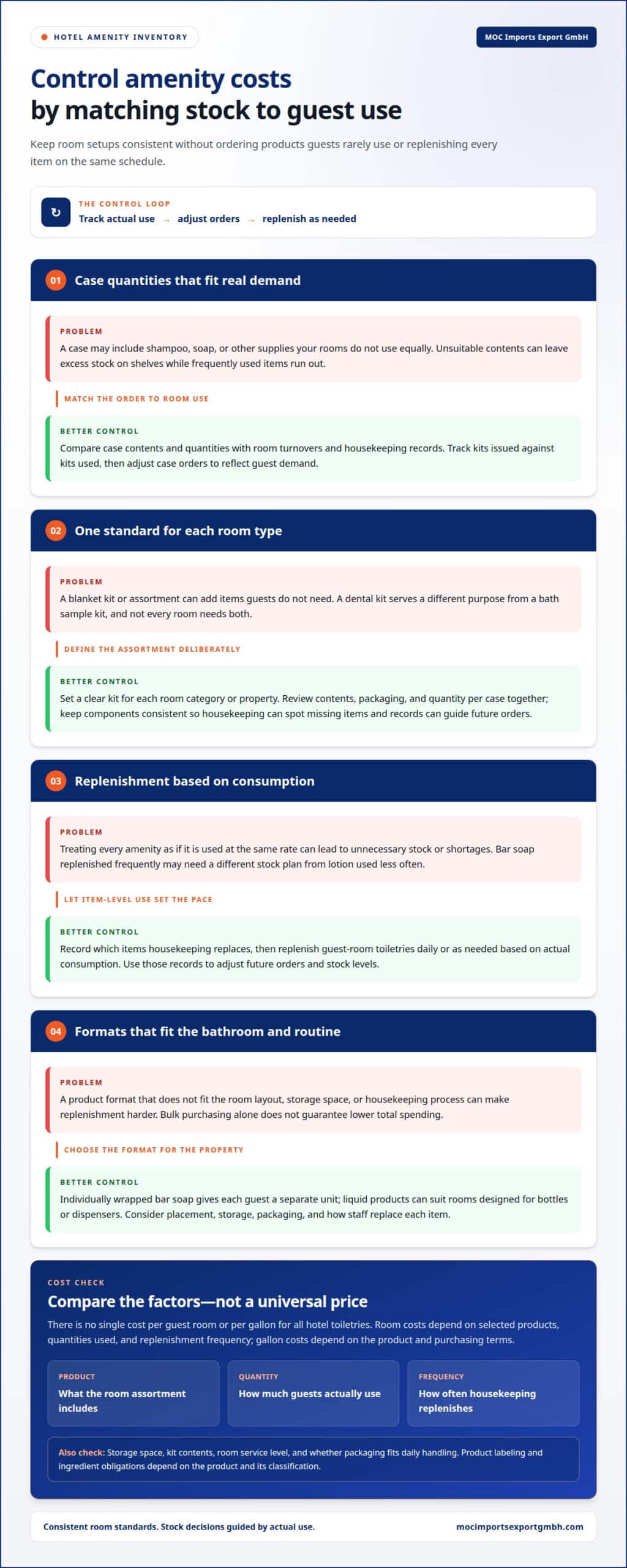
Amenity kits sold by the case combine individual guest supplies in one purchasing unit. Before ordering, compare the case contents with what your rooms actually use, such as hotel shampoo, soap, or a vanity kit. Unsuitable contents can leave staff storing excess supplies while frequently used products run out.
Compare case quantities with room turnovers and housekeeping records. For example, track the kits used over a period against the cases issued to housekeeping. This reveals gaps between purchasing volume and guest demand. Bulk toiletries for boutique hotels should support a consistent room setup without adding products guests rarely use.
Wholesale Toiletry Kits
Wholesale hotel toiletry kits can simplify purchasing by grouping several guest amenities. Review contents, packaging, and quantity per case together rather than treating the kit as a single, undifferentiated item. A kit centered on shampoo and soap may suit one property, while another may need a wider range of personal-care items.
Set a standard kit for each room type or property, then match case orders to that standard and the housekeeping routine. This makes missing items easier to spot, keeps presentation consistent, and helps you adjust the product mix as usage changes. Premium packaging can complement a luxury guest experience, but it should suit the room’s service level.
Dental, Bath, and Vanity Kits
Dental kits, toothbrushes, bath and body sample kits, and plastic-free vanity kits meet different guest needs. Choose each based on its purpose, packaging, and role in the room setup. A dental kit, for example, serves a different need from a bath sample kit, so including both automatically may add supplies guests do not use.
Choose a defined assortment for each room category and keep its components consistent. Consider whether plastic-free packaging fits your purchasing priorities and daily handling processes. Track which kits housekeeping replenishes most often, then use those records to guide case orders. A clear assortment limits unnecessary variety while keeping useful amenities in stock.
Labeling and Cost Considerations
FDA labeling and ingredient obligations depend on the product and its classification. Apply the relevant labeling and ingredient information to each toiletry according to its classification. Do not assume one labeling approach covers every hotel amenity: shampoo and other personal-care products can have different requirements.
There is no single cost per guest room or per gallon that applies to all hotel toiletries. Room costs depend on the selected products, quantities used, and replenishment frequency; gallon costs depend on the product and purchasing terms. Compare these factors with actual usage, then adjust case quantities and room assortments. This keeps cost control specific to your operation without removing amenities guests need.
Amenities for hotels, resorts, and vacation rentals
Choose hotel amenities to suit the property’s room setup, guest expectations, and housekeeping routine. A boutique hotel, resort, and vacation rental may each need a different bathroom assortment.
Bar Soap and Liquid Amenities
Bulk bar soap and liquid amenities suit different bathroom layouts and service preferences. Individually wrapped bar soap gives each guest a separate unit, while liquid products can suit rooms designed for bottles or dispensers. Choose a consistent assortment for each room type, including the hotel shampoo and body wash guests use in the shower.
For example, a vacation rental with a compact bathroom may need a simpler setup than a resort suite. Consider where each item goes, how housekeeping replaces it, and whether the packaging is easy to store. Keep the format consistent across comparable rooms to simplify replenishment.
Single-Use Amenity Cost Management
Manage single-use amenities by matching order quantities to actual consumption. Record which items housekeeping replaces in guest rooms, then use those records to adjust future orders. Bar soap replenished frequently may need a different stock plan from lotion used less often.
Bulk purchasing can support planned inventory, but a larger case does not automatically lower total spending. Consider the kit contents, storage space, and usage rate together. For instance, a property that rarely provides vanity kits should not automatically include them in every room.
Quality Amenity Benefits
Quality amenities help create a consistent guest experience in bathrooms and shower areas. Choose products that suit your hospitality standards, then check that the packaging, presentation, and placement work together. A premium assortment may suit a luxury suite, while a simpler selection may better fit a smaller vacation rental.
Consistency also gives housekeeping a clear setup to maintain. Set a standard arrangement for each room category, such as placing hotel shampoo beside body wash and bar soap near the sink. This limits variation between rooms and makes missing items easier to identify during service.
Hotel Soap and Amenity Brands
Compare hotel soap and amenity brands by their product range, packaging, and fit with your service level. Select products that work together as a bathroom assortment instead of choosing each item in isolation. Matching the presentation of shampoo, conditioner, and soap, for example, can make the room setup feel more organized.
Brand selection should also make purchasing manageable. Keep the approved assortment clear for housekeeping and procurement, and review it when guest use or room standards change. For boutique hotels, a focused range of bulk amenities can balance distinctive presentation with manageable stock.
Hotels, resorts, and vacation rentals can tailor their assortment without complicating replenishment. Define which hotel amenities belong in each room type, then align purchasing and housekeeping records with that setup.
Bulk travel-size shampoo, conditioner, body wash, and lotion
Hotel-size toiletries typically include shampoo, conditioner, body wash, bar soap, and lotion. Choose formats based on room layout, guest use, and housekeeping procedures.
Bulk Hotel Hair and Body Products
Bulk hotel shampoo, conditioner, body wash, and lotion can be purchased separately or as coordinated amenities. First define which products belong in each guest room. A room with a shower may need shampoo and body wash, while a suite’s bathroom setup may also include conditioner and lotion.
Consider packaging and storage alongside product selection. Travel-size units give housekeeping individual items to place or replace; larger formats need a designated storage location and a consistent refill routine. Label product names and room placement clearly so staff can distinguish shampoo from conditioner during setup.
Use purchasing records and housekeeping observations to refine the assortment. If conditioner remains unused while shampoo is regularly replenished, factor that pattern into future orders. The goal is a practical product mix, not an identical set of items in every room type.
Soaps, Body Wash, Lotions, and Oils
Hotel soaps and body wash have related but distinct roles in the bathroom. Bar soap is a solid amenity, while body wash is a liquid product for the shower. Choose the format that suits the room’s fixtures, guest expectations, and housekeeping setup. A coordinated arrangement might place soap by the sink and body wash near the shower.
Body lotion offers a separate personal-care option, while oils may suit a more specific guest experience. Give each product a clear purpose in the room assortment. A compact guest room, for example, may use soap, shampoo, and lotion, while a larger suite may accommodate a broader selection.
Review each item’s labels, packaging, and handling requirements before assigning storage space. A toothbrush or other personal-care amenity also needs its own place, separate from liquid products. Clear organization helps staff prepare rooms without confusing similar containers.
For bulk orders, group products by use and room placement. Keep a list identifying each item, its assigned location, and its replenishment process. This gives procurement and housekeeping a shared reference for shampoo, conditioner, body wash, soap, and lotion.
Wholesale hotel toiletries and personal-care items
In the United States, boutique hotels can source wholesale toiletries through importers and distributors that serve business buyers. Choose a supplier and purchasing format that suit your room assortment, storage capacity, and replenishment process.
Start with a product list organized by guest use. Separate shower products, bathroom amenities, and personal-care items such as shampoo, soap, and toothbrushes. This makes it easier to decide which products belong in each room and which can be offered on request. A focused assortment also gives purchasing staff a clear basis for repeat orders.
Next, match each product’s format to housekeeping needs. Travel-size bottles provide individual units for room placement, while individually wrapped products stay separate until use. Case quantities should suit available storage and the property’s consumption patterns. A small boutique hotel, for example, may prefer a compact selection over cases of products used only occasionally.
Review product details before placing a wholesale hotel order. Confirm the item name, size, quantity per case, packaging type, and intended use. Record these details so staff can distinguish similar products and reorder the correct item. For lotion, for example, note whether the room setup uses individual bottles or another format.
Wholesale purchasing works best when procurement and housekeeping follow the same room standards. Create a room-by-room list showing which amenities staff place, replace, or provide on request. Before each order, compare the list with usage records. If wrapped soap is regularly used but a particular personal-care item remains untouched, adjust the assortment instead of automatically buying the same mix.
For travel properties, consider room turnover and access to storage when setting the purchasing routine. A vacation rental may need a different replenishment approach from a hotel with dedicated housekeeping. Keep reserve stock in a designated place, label cases clearly, and record when a product is opened or moved into room inventory. These steps help prevent duplicate orders and misplaced supplies.
The key is to treat wholesale sourcing as an inventory decision, not just a product search. Define the room assortment, select suitable packaging, record case details, and use actual consumption to guide future purchases. This helps boutique hotels provide consistent guest amenities while keeping purchasing aligned with operational needs.
What are the best bulk shampoo, conditioner, body wash, and lotion brands for boutique hotels?
No single brand is right for every boutique hotel. Choose brands based on how their product range, packaging, and presentation suit your rooms. A property with compact bathrooms may prioritize easy-to-place bottles, while a luxury suite may use a coordinated range of shampoo, conditioner, body wash, and lotion.
Start by defining the experience you want each bathroom to offer. Choose a consistent product range, then check how each item looks beside the sink or shower. Mismatched bottle styles, for example, can make a carefully designed room feel less organized. Coordinated packaging can create a consistent appearance across comparable room types.
Next, check that the brand offers the specific products your rooms need. Treat shampoo and conditioner as separate items, and assign body wash a clear place in the shower. Lotion serves a different purpose and may belong beside the sink or with other personal-care amenities. Avoid buying a broad range simply because it comes from one brand.
Packaging affects both presentation and daily operations. Compare travel-size bottles with other formats based on room layout, storage, and housekeeping procedures. A small guest room, for instance, may be easier to service with individual units, while a property using refillable dispensers needs products suited to that setup. Keep the chosen format consistent within each room category.
Compare the brand’s range with your purchasing plan. A brand that offers suitable shampoo but no matching body wash may require a second supplier or a mixed assortment. Either can work, but procurement should record every product separately. Use clear item names and room assignments to prevent staff from placing conditioner where body wash belongs.
Before adopting a new brand as standard, evaluate its products in a representative room. Check bottle placement, ease of handling, and whether the full assortment fits the bathroom layout. Then gather housekeeping feedback on setup and replenishment. This practical review can identify packaging or product-range issues before routine purchasing begins.
For boutique hotels, the best brand choice is one that meets guest expectations and fits daily operations. Compare the full assortment, not just one shampoo bottle. Make sure the selected products create a coherent bathroom presentation and that staff can identify, store, and replenish each item consistently.
MOC Import Export
MOC Import Export GmbH supports business purchasing with selected personal-care and household goods. For hotel operators managing supplies beyond bathroom toiletries, its range includes Oral-B Pro Cross Action Electric Toothbrush Heads – Pack of 8 (White), Oral-B iO5 Electric Toothbrushes for Adults Black, and Gain Original Liquid Laundry Detergent – 5 Gallon.
These products can also support related needs, such as guest oral-care supplies or laundry operations, but they do not replace shampoo, conditioner, body wash, or lotion. Use your room amenity plan to assign personal-care and housekeeping purchases, then keep those categories distinct in inventory records.
Contact MOC Import Export GmbH to discuss your business purchasing needs.
Turn your amenity plan into the next purchase cycle
Use your room standards to guide the next purchasing cycle. As guest needs shift, distinguish bathroom toiletries from supplies intended for particular stays. For example, family-oriented vacation rentals may plan for baby supplies separately from their standard bathroom assortment. MOC Import Export GmbH offers Pampers ZZZ Overnight Diapers, Size 5 (27+ lbs), 88 Count, for businesses sourcing that type of guest supply. Keeping product categories separate helps each order serve a clear operational purpose.
For bulk toiletries for boutique hotels, a practical next step is to assign purchasing responsibility and document the products approved for each room type. This gives staff a clear reference when preparing rooms and managing inventory.
Discuss your business purchasing needs with MOC Import Export GmbH and take the next step toward an organized supply plan.
Frequently Asked Questions
Why Invest in Quality Hotel Amenities?
Quality amenities help a guest room feel considered and professionally maintained. Presentation, ease of use, and consistency all shape how guests perceive the bathroom setup. For example, keep the amenity arrangement the same across rooms in the same category, even when housekeeping teams change. Review guest comments alongside operational feedback to identify products that cause friction, such as difficult-to-open packaging or bottles that are hard to place neatly.
What bulk toiletries do boutique hotels typically provide in guest rooms?
Boutique hotels commonly provide shampoo, conditioner, body wash, soap, and lotion, adding dental or vanity items to suit the room offering. The practical assortment may differ between a standard room and a suite. A property might place core shower products in every room and offer a toothbrush kit through the front desk. Clear room standards help staff maintain a consistent setup.
What are the minimum order quantities and shipping costs for hotel toiletries suppliers?
Minimum order quantities depend on the supplier’s case configuration and the product. Shipping charges depend on order size, destination, and delivery arrangements. Treat each product as a separate purchasing line: a case of soap may contain a different quantity from a case of lotion. Build orders around expected use and storage capacity, then compare the full order terms rather than judging a product by its unit format alone.
Are bulk toiletries more cost-effective than individual hotel amenity bottles?
Bulk toiletries can be more cost-effective when the property uses the full quantity and limits waste, but the format alone does not determine value. Compare total purchasing and handling costs with what the property actually uses. A large container, for example, may require extra work if staff must refill bottles, while individual units may simplify room preparation. Storage space, guest use, and discarded product all affect the result.
How can hotels choose sustainable, cruelty-free, or locally made bulk toiletries?
Review the specific sustainability, animal-testing, or local-production claims attached to each product. Compare packaging materials, sourcing details, and supporting documentation instead of relying on broad terms alone. Set priorities first, such as reducing plastic packaging or buying locally made products, then assess each item against them. Record the basis for each choice to keep purchasing decisions consistent as the assortment changes.
How should hotels store, refill, and maintain bulk toiletry dispensers safely?
For larger-format toiletries, designate a storage location and establish a consistent refill routine. Label product names and room placement clearly so staff can distinguish items during setup.
