

Uncategorized
Wholesale marketplace and supplier options for beauty retailers

01
Nov
Nov
The best alternative to Faire may be a different sourcing route, not another marketplace. Faire wholesale alternatives for personal care and skincare retail include other wholesale marketplaces, supplier directories, and global sourcing options. The right choice depends on whether you prioritize brand discovery, a broader supplier search, or bulk purchasing.
Faire is a familiar starting point for retailers looking for wholesale brands, but it may not suit every product range or purchasing process. Comparing sourcing options helps you see how suppliers are found and which route best fits your inventory needs.
This guide compares wholesale marketplaces, supplier directories, and global sourcing for personal care and skincare retail. Use the practical criteria below to weigh each option and choose an approach that suits your business.
Key Takeaways
- Compare wholesale marketplaces, supplier directories, and global sourcing routes by how they fit your product range and buying process.
- Use supplier discovery, order terms, and sourcing scope to identify why a retailer might look beyond a single marketplace.
- Assess fashion and beauty sourcing separately, since product focus can shape which channels are most useful.
- Review payment terms, shipping offers, and first-order incentives at the platform level before choosing a purchasing route.
- For bulk purchasing, consider whether established personal-care products such as Oral-B toothbrush heads suit your inventory needs.
1. Wholesale marketplace alternatives to Faire
When comparing Faire wholesale alternatives for personal care and skincare retail, assess product selection, brand quality, and exclusivity. Marketplace assortments may include established manufacturers, emerging labels, or broad catalogs, and each platform has a different screening process and brand mix. Exclusivity depends on the brand’s sales channels and listing terms.
A small US retailer can search by product category, then filter by brand or intended use. Before buying, compare case size, minimum order, shipping origin, and reorder options. Review the seller profile, product details, and return terms in the listing and checkout.
Wholesale platforms serve different sourcing needs. A curated marketplace can help buyers discover brands in a focused category, while broader marketplaces may connect retailers with manufacturers across product types. Supplier-led platforms offer a direct route to a brand’s catalog. For skincare, search by product function and brand, then compare each seller’s available range.
Discovery depends on how listings are structured. Use precise terms such as “facial serum” or “cleanser,” then compare product titles, descriptions, pack formats, and seller information. Strong listings make product differences easier to assess. For example, a retailer considering a branded serum can compare its format and intended use with other skincare listings. Skincare product categories can also help frame an assortment search.
Marketplace visibility depends on the details sellers provide and the way buyers search. Save relevant listings, compare supplier catalogs, and track products that fit your assortment. Keeping a consistent record of product and order details also makes repeat purchasing easier. Complete listings help brands explain their products clearly, beyond broad category labels.
Marketplace commission and seller fees can affect costs, but fee structures vary. A platform may charge commission on transactions, while other charges depend on its terms or seller services. Compare the order total and applicable terms instead of assuming every platform uses the same model. Assess product cost, shipping, and order conditions separately.
Service performance can affect a brand’s ability to maintain momentum: a customer service metric above 25% makes it very difficult for a Faire brand to recover sales momentum. For retailers, clear communication and reliable order handling matter alongside product range. Compare platform processes as well as catalog content, especially when the goal is a dependable source for repeat orders.
The right marketplace depends on the assortment you want to build. Compare focused beauty catalogs with broader wholesale platforms, then assess their listings against your product criteria. A consistent search can help you find suitable brands and manufacturers without treating every marketplace as interchangeable.
2. Reasons retailers and brands consider alternatives
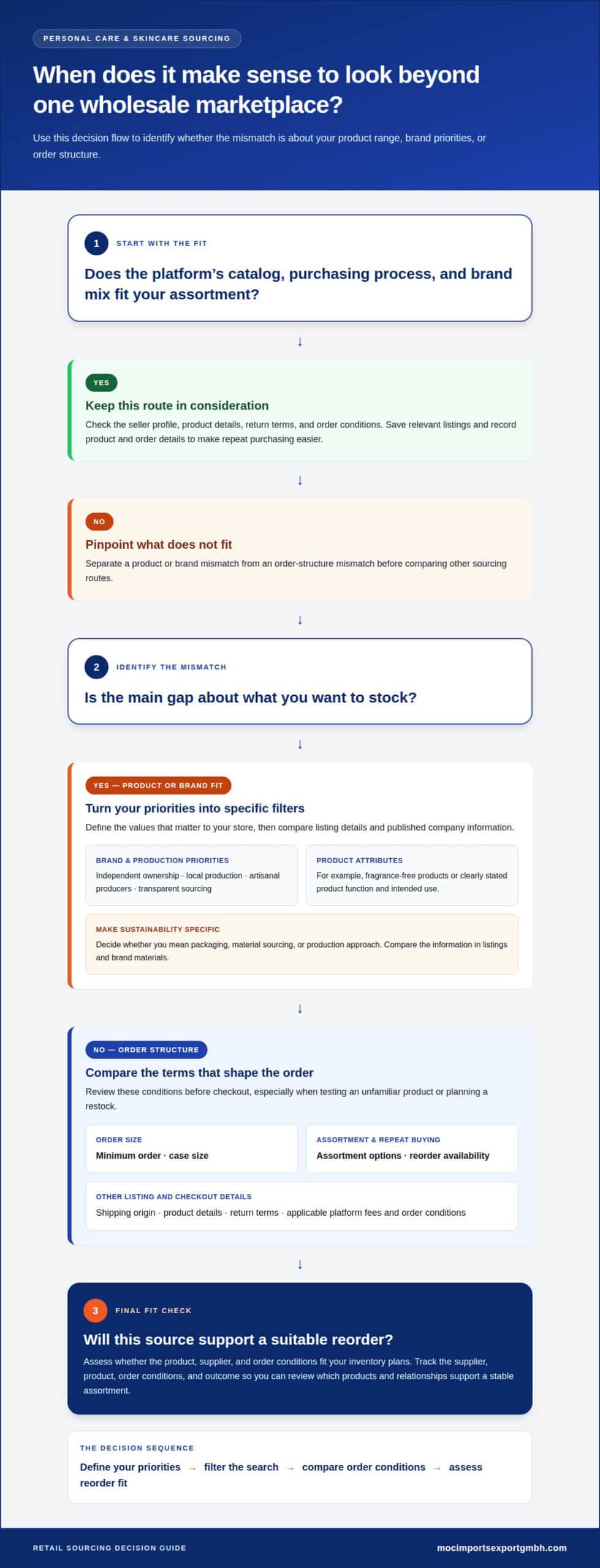
Retailers look beyond one marketplace when its catalog, purchasing process, or brand mix does not fit their assortment. For example, a skincare shop focused on fragrance-free products may need listings that make product attributes easy to compare. Brands also explore other channels to reach retailers in ways that fit their sales and distribution plans.
Brand values can guide your search. You might prioritize independent ownership, local production, reduced packaging, or transparent sourcing. Treat each as a specific filter rather than a broad label. Review product descriptions and published company information, then compare the details with your merchandising priorities. Clear criteria narrow the options before you order.
Sustainability is another reason retailers broaden their search. Because the term can refer to different practices, identify what matters to your store, such as packaging, material sourcing, or production approach. Compare the information in listings and brand materials. This gives you a consistent basis for choosing products without assuming every brand follows the same standards.
Independent brands and artisanal producers can add a distinct range alongside widely distributed names. Their products, presentation, and production models may suit retailers looking for a more specialized shelf. Consider how each item fits existing categories and how to describe it accurately. A focused selection can support a store’s identity without requiring a large catalog.
Order structure can also prompt a platform change. A lower minimum may let a retailer test an unfamiliar product with a smaller initial commitment. Case size, assortment options, and reorder availability all affect how that first order fits inventory plans. Compare these terms before checkout, particularly when the product is a trial rather than part of a regular restock.
For brands, alternative channels can strengthen retailer relationships when listings and ordering tools fit the sales process. For buyers, consistent product details make comparisons easier and help identify items worth reordering. Track the supplier, product, order conditions, and outcome in a simple purchasing record. Over time, it shows which relationships support a stable assortment and which products need further review.
Use a short decision sequence: define the values that matter, filter for independent or artisanal brands, compare order conditions, then assess reorder fit. This keeps the search tied to retail needs rather than platform popularity. Retailers refining their personal-care purchasing plans can discuss their wholesale requirements as a next step.
3. Supplier directories and global sourcing
Supplier directories offer a route beyond curated marketplaces. Search by product category, brand, or manufacturer, then approach suppliers directly. For US skincare retailers, directories may surface catalogs from distributors and brands that use different ordering channels. The trade-off is more work: buyers manage comparisons, communication, and order details across suppliers.
Directories such as Creoate can help retailers find independent brands and browse their wholesale catalogs. Treat a directory listing as a starting point, not a complete supplier assessment. Compare the company name, product range, business contact details, and ordering information. Then check that product descriptions fit your assortment and record the supplier’s stated order terms.
When verifying a supplier, look for traceable business information and consistent product records. Compare the catalog with the invoice and product packaging before adding an item to your store’s system. For a facial serum, for example, confirm that the product name, size, and brand match across the records. Clear documentation supports accurate listings and repeat orders.
Before building a long-term relationship, ask how the supplier handles manufacturing and sourcing. A brand may manufacture its own products, use a contract manufacturer, or distribute goods made by another company. These arrangements affect whom buyers contact for product information or order issues. Record the responsible business and product details supplied with each order.
Refund and exchange policies matter because wholesale orders may involve case quantities and planned inventory. Read the written terms for damaged goods, incorrect shipments, returns, and reporting deadlines. Keep order confirmations and delivery records together so you can understand the process and provide clear details if an issue arises. Policies vary, so do not assume marketplace protections apply to direct orders.
US retailers can buy skincare and personal care products directly from brands or distributors. Direct purchasing may provide access to a supplier’s catalog and ordering process, while marketplaces can make supplier discovery and comparison more convenient. The right route depends on the products you need, order structure, and preferred supplier relationship.
For US cosmetics and skincare, applicable FDA requirements depend on whether a product is classified as a cosmetic, a drug, or both. Intended use and product claims help determine the classification, so assess the finished product’s label and claims before listing it.
Global sourcing broadens the supplier pool but adds coordination for buyers. Clarify who handles product documentation, shipping arrangements, and order communication. Compare those responsibilities with domestic sourcing, where supplier coordination may be more direct. A clear sourcing record can also help manage future orders when products are in demand.
A practical process is to search a directory, shortlist suppliers, compare catalog details, review written order and return terms, then place an order that fits your inventory plan. This grounds supplier selection in product fit and operating needs, whether you buy from a boutique brand, distributor, or manufacturer.
4. Fashion and beauty wholesale sourcing
Fashion and beauty retailers need different sourcing criteria, even when platforms serve both categories. A clothing buyer may compare size runs, colors, and seasonal styles; a skincare buyer may focus on product type, brand, and package format. Search categories separately to make comparisons relevant and avoid letting unrelated listings shape purchasing decisions.
Define your assortment first, then compare platforms against it. A boutique adding facial care might prioritize skincare sellers and a manageable range of product types. A fashion retailer adding beauty products may need a broader platform with several categories. Platform breadth matters only when the listings support the products you plan to stock.
Minimums affect how a retailer tests a new category. Compare each seller’s order minimum, case quantity, and assortment options before building a cart. For example, a store trialing facial cleanser and serum should check whether the seller allows a mixed order. A low minimum can limit the initial stock commitment, while larger case quantities call for more inventory planning.
Listing details make product comparisons more reliable. For each skincare item, record the brand, product name, package size, and intended use shown in the listing. For fashion, record the style, available sizes, and color options. Using the same process helps reveal missing details and compare sellers on relevant criteria, rather than promotional images or broad category labels.
Review returns before ordering. Compare each seller’s written policy for damaged goods, incorrect items, and return eligibility. A retailer ordering skincare and apparel from different sellers may face separate processes and reporting steps. Organize confirmations and delivery records by supplier so you can refer to them if a shipment does not match the order.
Assess profitability using the full purchasing picture, not just the displayed product cost. Include shipping, order quantity, and expected retail price. A larger case, for example, may lower the per-unit purchase cost but leave more stock to sell. Compare that inventory commitment with expected demand before choosing an order size.
A simple comparison sheet makes sourcing decisions more consistent. Add columns for category, seller, minimums, case size, shipping terms, returns, and reorder process. Use the same fields for every platform under review. This helps show whether a seller fits a fashion range, beauty assortment, or both, without treating wholesale platforms as equivalent.
Before ordering, match the supplier’s offer to your store’s category plan. Confirm that the listings support your intended assortment, the minimums fit your purchasing budget, and the return and reorder terms suit store operations. A documented comparison gives you a practical basis for selecting sellers and managing inventory across fashion and beauty.
5. Which platforms offer net payment terms, free shipping, or first-order discounts to retailers?
Payment terms, shipping offers, and first-order discounts vary by marketplace, seller, and order. An offer may appear at checkout or in a supplier’s listing. Compare the terms attached to the skincare products in your cart. Do not assume one marketplace-wide policy applies to every seller or future purchase.
Net payment terms set a deadline for payment after an order is invoiced. Before relying on them, identify the due date, eligible orders, and payment method stated for that transaction. For example, when planning a serum restock, distinguish deferred payment from a discount: one changes payment timing, while the other changes the listed order cost.
Read free-shipping offers closely. Check whether the offer applies to the seller, products, destination, and conditions in your cart. A mixed order from separate sellers may have separate shipping terms. Compare the final checkout summary with the product listings, and record the applicable terms with the supplier and order details.
A first-order discount can help retailers evaluate a new supplier, but it applies to the initial purchase and does not automatically set the cost of future orders. Review eligible products and stated conditions before ordering. Then compare the discounted purchase with the supplier’s standard listing and reorder terms. This separates a one-time incentive from ongoing purchasing costs.
No single platform is the best choice for every benefit without a comparison of current offers and seller terms. Use the same review process across marketplaces: check payment timing, shipping conditions, discount eligibility, and the order total. A retailer comparing skincare suppliers can record these details side by side before deciding where to buy.
Keep a purchasing record for every order. Include the platform, seller, product, payment terms, shipping charge, discount, and reorder conditions. This makes it easier to assess whether an introductory offer supported a useful trial or another supplier’s ongoing terms better fit planned inventory. Base the comparison on checkout details, not a headline promotion.
For a practical decision, rank terms by their operational value. A retailer managing cash flow may prioritize payment timing, while a small test order may benefit more from reduced shipping or an eligible first-order discount. Match the offer to the order’s purpose and review the full checkout total before placing it.
To discuss bulk purchasing needs for personal-care products, contact the wholesale team.
MOC Import Export GmbH: Oral-B Pro Cross Action Electric Toothbrush Heads – Pack of 8 (White)
MOC Import Export GmbH is a practical next step for retailers sourcing established personal-care products for their assortment. Its wholesale offering includes Oral-B Pro Cross Action Electric Toothbrush Heads – Pack of 8 (White), an oral-care item for stores planning to stock recognizable consumer brands. Retailers can compare this product with their category needs and purchasing plans.
The pack format supports inventory planning for businesses purchasing beyond single-unit retail. MOC Import Export GmbH also offers selected personal-care and household products, making its range relevant to buyers reviewing several product categories alongside their sourcing options.
For wholesale purchasing information, contact MOC Import Export GmbH or visit mocimportsexportgmbh.com.
Turn Your Sourcing Criteria Into a Buying Plan
Turn your platform comparisons into a practical purchasing plan. Decide which product categories fit your store, what order structure suits your inventory, and which supplier terms support repeat purchasing. Comparing Faire wholesale alternatives for personal care and skincare retail is most useful when it leads to a clear assortment decision, not simply a longer list of marketplaces.
MOC Import Export GmbH offers established consumer goods for business buyers, including Pampers ZZZ Overnight Diapers, Size 5 (27+ lbs), 88 Count, and Oral-B iO5 Electric Toothbrushes for Adults Black. These examples show how a wholesale assortment can extend beyond skincare into adjacent personal-care categories. Consider whether those products fit your store’s planned range and purchasing needs.
For a focused discussion about sourcing, contact MOC Import Export GmbH about your wholesale requirements. A clear buying plan gives your next supplier conversation direction and helps you move forward with confidence.
Frequently Asked Questions
What wholesale marketplaces compete with Faire for personal care and skincare brands?
Retailers can compare curated wholesale marketplaces, broader product platforms, supplier directories, and direct purchasing from brands or distributors. Creoate is one option for discovering independent brands, while direct sourcing may suit buyers seeking a specific manufacturer’s range. For skincare, compare catalog depth, seller information, product formats, and ordering processes. The right fit depends on whether you need brand discovery, a focused category, or a direct supplier relationship.
What are the wholesale fees, commissions, and payment terms on Faire alternatives?
Fees and payment terms depend on the platform, seller, and order conditions. A commission may apply to marketplace transactions, and payment timing may differ between checkout and invoicing. Before purchasing, compare the final order total, shipping, displayed charges, payment due date, and discount eligibility. Separate a platform promotion from its standard terms, and do not assume a first-order offer applies to later reorders.
What are the minimum order quantities and opening order requirements for beauty wholesale platforms?
Minimums and opening-order requirements vary by seller and product, so review each listing and checkout before committing. A skincare supplier may set conditions by item, case, or total order, while another may allow a mixed assortment. For a new facial-care line, compare required quantities with shelf space and expected demand. This helps distinguish a manageable product trial from an order that needs broader inventory planning.
Which wholesale platforms verify retailers and require business licenses or resale certificates?
Retailer verification requirements differ across platforms and suppliers. Some may request business details or resale documentation during account setup or before wholesale ordering; others may use a different approval process. Read the platform’s registration steps and the seller’s purchasing requirements. Keep business records consistent across applications, invoices, and order accounts so your retailer identity and purchasing details align throughout the transaction.
What risks should retailers check when sourcing skincare products from wholesale marketplaces?
Before ordering skincare, review the seller’s identity, product descriptions, packaging details, return terms, and available product records. Compare the listing with the item received, including the brand, product name, and package information. Assess how the seller handles damaged or incorrect orders, too. When products are promoted with specific claims, ensure your store’s descriptions accurately reflect the information supplied for each item.
