

Uncategorized
Wholesale Supplies for Short-Term Rental Property Managers

27
Oct
Oct
Housekeeping and laundry supplies deserve as much attention as guest toiletries in a short-term rental. A practical plan for wholesale supplies for short-term rental property managers covers guest personal-care amenities, laundry essentials, housekeeping items, and cleaning products.
It’s easy to focus on the items guests see first, but reliable wholesale supplies for short-term rental property managers also include the everyday stock needed to wash linens, reset rooms, and clean shared surfaces. Buying in bulk can help managers organize repeat-use supplies around each property’s needs.
This guide explains what to source in each category and how to build a practical purchasing plan. Consider guest toiletries and personal-care products, laundry and housekeeping essentials, and cleaning supplies for regular turnovers. The goal is an inventory that keeps rentals guest-ready without making procurement unnecessarily complicated.
Key Takeaways
- Group guest amenities by purpose, from personal-care basics to optional items, and match stocking choices to your rental’s guest profile.
- Plan laundry and housekeeping stock around turnover tasks, linen volume, and storage capacity.
- Set bulk order quantities using usage and replenishment needs so you can avoid both frequent reordering and excess inventory.
- Compare suppliers by product range, order suitability, and how well their offerings fit your recurring operational needs.
- Build a practical cleaning-supply list around the surfaces and routine tasks each property requires.
Guest toiletries and personal-care amenities
Treat guest toiletries as a defined inventory category, not an afterthought. Start with bathroom basics for washing, grooming, and personal care. Then decide which items belong in every rental and which suit particular property types. A family-focused home, for example, may need a different amenity mix from a compact apartment.
Build the standard list around clear product categories. Hand soap supports sink use, while shampoo and body wash cover shower routines. Add conditioner if it fits the property’s guest expectations. Grooming supplies can include shaving products, and oral-care items may suit a broader amenity package. Keep optional products separate from core stock so housekeeping can replenish each category consistently.
- Bathroom basics: hand soap, shampoo, conditioner, and body wash.
- Grooming: shaving supplies and other selected personal-care items.
- Optional additions: oral-care products or a skincare item for a more complete setup.
Choose a consistent way to present and replenish products. Place them in a fixed bathroom location or organize them in a labeled housekeeping kit, using the same setup across comparable units. This makes it easier for cleaners to spot missing items and record what needs restocking after each departure.
Product formats affect storage and turnover routines. Individual guest-ready units can be counted for each arrival, while larger containers need a controlled refill process. Choose a format that suits your workflow and storage space. Group backup stock by product type, then record what and how much is used during each turnover. These records show which amenities move quickly and which remain untouched.
For properties that offer selected personal-care products, a named example is L’Oréal Paris Revitalift Filler Hyaluronic Acid Serum 30 ml. Treat an item like this as an optional amenity, not a replacement for bathroom essentials. Keep it distinct from the standard toiletries list so purchasing and room setup remain clear. A separate inventory line also helps staff maintain consistent placement from one stay to the next.
Shaving supplies can complement the grooming category; shave and hair-removal supplies give managers a relevant product group to consider. For wholesale supplies for short-term rental property managers, the practical decision is which items belong in every unit and which should remain optional. Set that distinction first, then standardize product placement, storage, and restocking across the portfolio.
Housekeeping and laundry supplies
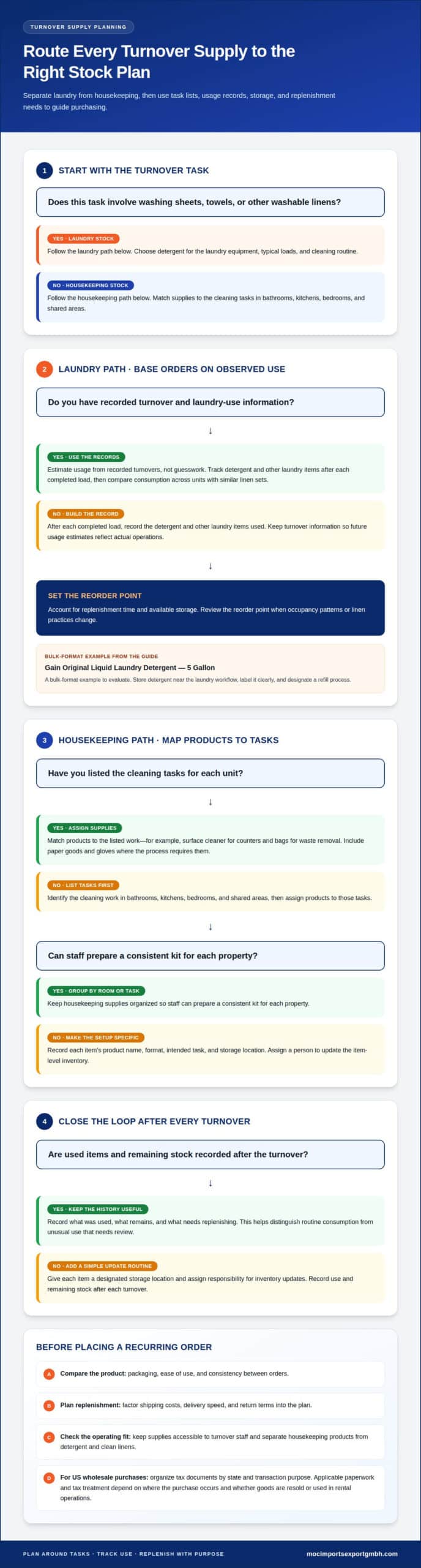
Match turnover supplies to the work performed in each rental. Separate housekeeping stock from laundry stock, and track both in one inventory system.
Housekeeping Supply Selection
Housekeeping stock includes the consumables used to reset bathrooms, kitchens, bedrooms, and shared areas. List each unit’s cleaning tasks, then assign products to them, such as surface cleaner for counters and bags for waste removal. Include paper goods and gloves where the process requires them. Group supplies by room or task so staff can prepare a consistent kit for each property.
Compare products by packaging, ease of use, and consistency between orders. Factor shipping costs, delivery speed, and return terms into replenishment planning. For US wholesale purchases, organize tax documents by state and transaction purpose. Applicable paperwork and tax treatment depend on where the purchase occurs and whether goods are resold or used in rental operations.
Laundry Supply Selection
Laundry stock supports washing sheets, towels, and other washable linens between stays. Choose detergent based on the laundry equipment, typical loads, and cleaning routine. Gain Original Liquid Laundry Detergent – 5 Gallon is one bulk-format example for managers evaluating larger-volume laundry products. Store detergent near the laundry workflow, with a clear label and a designated refill process.
Estimate usage from recorded turnovers, not guesswork. Track detergent and other laundry items used after each completed load, then compare consumption across units with similar linen sets. Set a reorder point that accounts for replenishment time and available storage. Review it when occupancy patterns or linen practices change.
For housekeeping supplies, maintain an item-level inventory with a designated storage location and a person responsible for updates. After each turnover, staff can record what was used, what remains, and what needs replenishing. This creates a useful history for each rental without relying on memory and helps distinguish routine consumption from unusual use that needs review.
Keep the purchasing list specific. Record product name, format, intended task, and storage location for each item. For laundry detergent, distinguish bulk containers from smaller working containers so staff can manage refills consistently. A laundry detergent range can help buyers compare relevant formats. Managers planning recurring orders can also discuss bulk supply requirements based on their inventory process.
A listed Wichita wholesale house has 900 square feet of area. These property details can help frame supply planning, but they do not replace a direct review of the rooms, storage areas, and laundry workflow at a rental. Keep purchasing decisions tied to the work staff perform and the space available for storing supplies.
When assessing a property, note where housekeeping products can be stored separately from detergent and clean linens. Choose an accessible location for turnover staff, and clearly identify working containers. Revisit the arrangement when cleaning routines or linen practices change. A consistent setup makes consumption easier to track and helps staff replenish supplies without filling limited storage with items the work does not require.
Bulk purchasing and cost savings
Bulk orders can simplify replenishment, but value depends on product use, storage, and delivery terms. Review total purchasing needs before setting order quantities.
Durable Commercial-Grade Supplies
For items used repeatedly, assess construction, cleaning requirements, and replacement frequency. Durable commercial-grade items can reduce replacement needs when their specifications suit the property’s use. Check product details against actual tasks, such as frequent laundering or repeated surface cleaning. For consumables, compare packaging and quality consistency rather than assuming a larger case is better value.
Prices for linens, toiletries, cleaning products, and kitchen supplies vary by product type, quality, pack size, and order volume. Compare equivalent items and include delivery costs when evaluating value.
Bulk orders also bring storage and quality considerations. Match quantities to available space, organize products by type, and rotate stock so older items are used first. For toiletries and cleaning products, follow storage instructions and check packaging condition on receipt. Large orders make sense only when products remain usable and accessible.
Local Sourcing and Shipping Costs
To manage shipping costs, compare suppliers serving your area and consolidate compatible items into fewer orders. Local sourcing can simplify replenishment when a product is needed sooner. Compare delivered cost, not just item price, and consider how order size affects transport, receiving, and storage.
Recurring deliveries or subscriptions can suit supplies with predictable use, such as paper goods or routine cleaning consumables. Set a schedule based on recorded consumption and storage capacity. Adjust quantities when occupancy, turnover patterns, or product use changes, rather than letting fixed shipments create excess stock.
Use a simple purchasing sequence:
- Record each supply’s use during turnovers.
- Set reorder points using remaining stock and replenishment time.
- Compare equivalent products, pack sizes, shipping, and return terms.
- Review stock condition and usage before repeating a bulk order.
For durable items, weigh service life against suitability for the task. For consumables, base quantities on tracked use. This keeps purchasing decisions tied to property operations, not case size alone.
Property acquisition costs are separate from operating supplies and do not show whether linens or consumables offer savings. Keeping them apart from recurring supply orders prevents unlike expenses from being compared as if they were equivalent. Record property prices separately from product, delivery, and storage costs, then assess each against its own purpose.
Cleaning supplies
A rental cleaning kit should reflect the property’s room layout and turnover tasks. Start with a room-by-room checklist and assign each product a specific use. A kitchen may need surface cleaner, dish soap, and waste bags. A bathroom may need a separate cleaner, cloths, and a toilet brush. This task-based setup helps staff choose supplies consistently.
Separate products by function rather than relying on one general-purpose item. List products for counters, floors, glass, bathroom fixtures, and kitchen surfaces, matching each to the surfaces and tasks it is intended for. Follow label directions and keep containers in their original packaging so staff can identify them during a turnover.
Reusable tools matter as much as cleaning liquids. Stock cloths, sponges, brushes, mop heads, and vacuum bags according to each property’s equipment and rooms. Use a simple color or label system to distinguish tools for kitchens, bathrooms, and other areas. This reduces mix-ups and makes worn tools easier to identify before the next departure.
- Kitchen: surface cleaner, dishwashing supplies, cloths, and waste bags.
- Bathroom: bathroom cleaner, toilet brush, dedicated cloths, and replacement bags.
- Floors: a suitable floor cleaner, mop supplies, and vacuum consumables.
- Glass and mirrors: glass cleaner and a lint-free cloth.
Set quantities using actual consumption. Record which products cleaners take from the supply area after each property reset, then compare those records with remaining stock before reordering. Track products used across several rooms separately from supplies used in only one space. This helps identify frequently used items without over-ordering specialized products.
Include storage and handling in purchasing decisions. Group products by task, make working supplies easy to identify, and keep backup stock away from guest areas. Check containers when an order arrives and use existing stock before opening newer supplies. Make any storage or use directions on product labels accessible to the staff responsible for cleaning.
Test the kit against an actual turnover checklist. Walk through the rental from entryway to bedroom, noting each task and the product or tool required. Add missing items, remove duplicates, and update the checklist when furnishings or surfaces change. A precise inventory gives purchasing decisions a clear basis and helps housekeeping teams prepare each property with fewer last-minute supply gaps.
Which wholesale suppliers serve vacation rental and Airbnb property managers in the US?
US rental managers can source supplies from broadline wholesalers, janitorial distributors, hospitality amenity suppliers, and food-service wholesalers. Each serves different needs, so match the supplier category to the products your properties use.
A janitorial distributor is relevant for cleaning chemicals, paper goods, waste bags, and housekeeping tools. Hospitality amenity suppliers focus on guest toiletries and room supplies. Food-service wholesalers can suit rentals that provide coffee, snacks, or breakfast items. A broadline wholesaler may cover several categories, reducing the number of separate orders to coordinate.
Start by dividing inventory into product groups. Put detergent, surface cleaners, and paper goods on a housekeeping list. Keep toiletries and guest consumables on an amenities list, with pantry items such as coffee listed separately. This makes it easier to compare suppliers by relevant product range instead of choosing one based on a single item.
Compare purchasing terms that affect day-to-day operations, including minimum order quantities, case sizes, delivery coverage, shipping charges, and return procedures. A supplier may carry the right category but still be a poor fit if pack sizes exceed your storage capacity. If you manage several properties, consider whether orders can be organized by location or replenishment schedule.
Assess quality by product consistency and suitability. Compare like-for-like items, including package size and intended use. For example, assess cleaning products by the surfaces and tasks they serve, and guest toiletries by their role in the property’s amenity plan. Keep a record of product names and formats so replacement orders match your established inventory.
Some suppliers offer recurring delivery, while others process orders as needed. A recurring arrangement can support predictable consumption, such as paper goods or routine laundry items. Ordering as needed may better suit seasonal properties or supplies with irregular use. Base the decision on inventory records and available space for backup stock.
Distinguish products used by staff from items provided to guests. This clarifies ordering, storage, and turnover preparation. Keep a supplier record for each category, noting the items purchased and the properties they serve. Review it when furnishings, cleaning routines, or guest amenities change.
For wholesale supplies for short-term rental property managers, the best supplier fit depends on category coverage, order format, delivery terms, and operational use. Define those requirements before comparing options, then align purchasing with your inventory process. Discuss wholesale supply requirements for your rental operation.
MOC Import Export: Oral-B Pro Cross Action Electric Toothbrush Heads – Pack of 8 (White)
MOC Import Export GmbH offers the Oral-B Pro Cross Action Electric Toothbrush Heads – Pack of 8 (White). These may suit rental managers whose guest amenity plans include oral-care products. Add them to the inventory when they fit your guest offering and purchasing process.
Managers can also consider Gain Original Liquid Laundry Detergent – 5 Gallon for laundry supply purchasing. Match each product to an inventory category, then plan orders around usage and storage capacity.
To discuss wholesale supply needs for your rental operation, contact MOC Import Export GmbH.
Turn your supply plan into a purchasing routine
Make the next step practical: assign an owner to each inventory category, keep product names consistent, and review purchasing records before repeat orders. A procurement plan for wholesale supplies for short-term rental property managers works best when every item has a clear purpose, storage location, and replenishment method.
MOC Import Export GmbH offers Oral-B Pro Cross Action Electric Toothbrush Heads – Pack of 8 (White), Pampers ZZZ Overnight Diapers, Size 5 (27+ lbs), 88 Count, and Oral-B iO5 Electric Toothbrushes for Adults Black. These examples can help managers assess whether branded personal-care and baby products fit their property inventory and guest offering.
Use your own purchasing priorities to guide the next discussion. Contact MOC Import Export GmbH to discuss your wholesale supply requirements. A clear inventory plan gives your next purchasing decision a practical starting point.
Frequently Asked Questions
What supplies do short-term rental property managers need to buy wholesale?
Managers commonly purchase guest toiletries, laundry products, housekeeping consumables, cleaning supplies, and selected kitchen or pantry items. The right mix depends on each property’s layout and guest setup. A rental with a washer, for example, needs laundry detergent, while a coffee station needs its own replenishment items. Create separate purchasing groups for guest and staff use, then tailor each list to the amenities and equipment in each unit.
What are the minimum order quantities and bulk discounts offered by rental supply wholesalers?
Minimum order quantities and bulk discounts depend on the wholesaler, product, and order format, so there is no single standard for rental supplies. Some items are sold by case or container, while other terms vary by supplier. Compare required quantities, product format, shipping charges, and return terms before ordering. A larger order makes operational sense only when products can be stored and used while still suitable.
What are typical wholesale prices for short-term rental linens, toiletries, cleaning products, and kitchen supplies?
Prices vary by product type, quality, pack size, and order volume.
